
As an Ottawa homeowner, you know the frustration of watching your beautiful, budget-friendly laminate floors lose their luster beneath a steady winter parade of rock salt, melting snow, and gritty mud, leaving you stressed about permanent streaks and swelling floorboards. The temptation is to grab a soaking wet string mop and a bucket of harsh, heavily fragranced chemicals to scrub away the grime, but this aggressive approach actually forces standing water deep into the vulnerable joints, causing irreversible warping, bubbling, and peaking that will completely ruin your flooring investment. Fortunately, protecting your home’s foundation is simple when you master the exact, professional-grade laminate floor cleaning methods Ottawa experts use—relying on a remarkably simple, low-moisture technique that safely lifts dirt, banishes cloudy streaks, and restores that welcoming, pristine finish without risking a single plank.
- Moisture is the ultimate threat: Laminate’s compressed core will permanently warp if exposed to excess water, meaning dry dusting, vacuuming, and immediate spill cleanup must always be your first line of defense.
- The 1-Drop Dawn method is all you need: The absolute safest, most effective way to clean laminate is using a barely-damp microfiber mop paired with warm water and exactly one drop of Dawn dish soap.
- Never use vinegar or bleach on floors: Vinegar is exclusively reserved for treating hard water mineral scale, and bleach is strictly for toilet bowls; both will severely damage or discolor your laminate’s protective wear layer.
Why is Moisture Laminate Flooring’s Biggest Enemy During Ottawa Winters? (The Swelling Problem)
To truly understand proper laminate floor cleaning methods, you have to look at how these planks are manufactured. Unlike solid hardwood, which is milled from a single piece of timber, laminate flooring is a highly engineered composite product. Beneath the tough, transparent wear layer and the high-definition photographic image layer lies a core made of high-density fiberboard (HDF) or medium-density fiberboard (MDF). This core is essentially densely compressed wood dust and resins. While the top layer is brilliantly designed to resist scratches from dog claws and dropped toys, the exposed fiberboard core at the edges of the planks acts exactly like a dry sponge when exposed to water.
In Ottawa, our climate poses a unique challenge to this flooring structure. During our long, slushy winters and messy spring thaws, family members and guests inevitably track in snow, ice, and calcium chloride road salt. When that snow melts on your floor, it creates puddles of water that slowly seep into the microscopic seams between your laminate planks. If you combine this environmental moisture with improper cleaning habits—like using a traditional, dripping-wet sponge or string mop—you are actively feeding water into the core of your floors. Once that moisture is absorbed, the fiberboard expands. This leads to edge swelling, bubbling, and “peaking” (where the joints raise up to form permanent ridges). Once laminate swells, it never shrinks back down to its original shape, leading to costly replacements.
This is why moisture control must be the foundation of your floor care routine. Using dry cleaning methods, such as a soft-bristle broom or a vacuum equipped with a hard-floor setting (with the beater bar turned off), should account for 90% of your maintenance. Wet cleaning should be a strategic, infrequent operation rather than a daily habit. By respecting the structural limitations of your flooring, you take a massive step toward maintaining a spotless capital home that looks newly renovated for decades to come.
How Can You Master Low-Moisture Damp Microfiber Mopping for Laminate? (The 1-Drop Dawn Method)
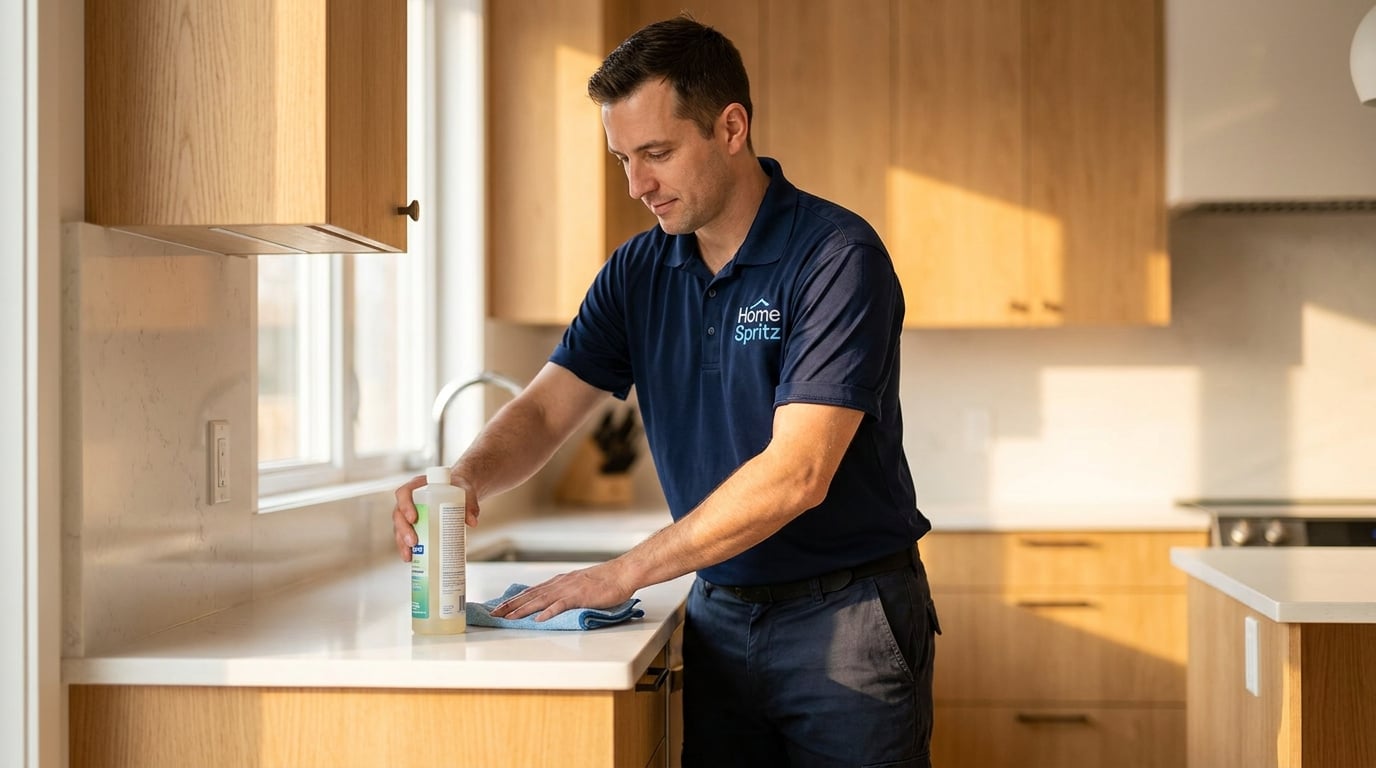
When the dry winter dust, dried salt stains, and kitchen spills accumulate to the point where vacuuming is no longer enough, you need to wet-clean. However, the secret to the best laminate floor cleaning methods in Ottawa lies in absolute minimal moisture. The gold standard for achieving a streak-free, thoroughly sanitized floor without risking water damage is the low-moisture damp microfiber mopping technique, paired with our mandatory Home Spritz cleaning formulation: warm water and exactly one drop of Dawn dish soap.
Many homeowners fall into the trap of buying expensive, heavily marketed commercial floor cleaners. These products often contain waxes, oils, and synthetic acrylics that promise a “brilliant shine.” In reality, they leave behind a sticky, cloudy residue that traps dirt and creates a dull film over time. Instead, simplicity is your best friend. To execute the 1-Drop Dawn method, fill your sink or a small bucket with warm water and add just a single drop of Dawn dish soap. This is the exact formula we mandate for all floors and counters. The soap acts as a gentle surfactant, breaking the surface tension of the water and effortlessly lifting away grease, sticky spills, and Ottawa’s notorious winter salt residue without leaving any film behind.
Dip a high-quality, clean microfiber mop pad into the solution. Now comes the most critical step: wring the pad out completely. You want the microfiber to be barely damp to the touch, not dripping. Attach it to your flat mop head and work in small sections, moving in the direction of the wood grain to prevent streaking. Because the pad is only slightly damp, the microscopic amount of water left on the laminate should evaporate within 30 to 60 seconds. If the floor stays wet longer than a minute, your mop is too wet. This ultra-lean, effective approach is a cornerstone if you are looking to adopt eco-friendly cleaning solutions for Ottawa homes.
As a bonus professional tip for maintaining total household harmony: while your floors and counters thrive on this 1-drop Dawn dish soap and warm water mixture, remember that your vertical surfaces require even less. When tackling cupboards and walls, strictly use plain warm water and a damp microfiber cloth to protect those delicate paint and cabinet finishes.
What is the Trick to Removing Shoe Scuffs Safely Without Damaging the Finish?
Even with a strict “no shoes in the house” policy, the reality of bustling Ottawa family life means dark rubber scuff marks will eventually appear on your beautiful laminate floors. Whether it is from a rogue winter boot, a hard plastic toy, or moving dining chairs, these scuffs can be an eyesore. The absolute worst thing you can do is attack a scuff with an abrasive scouring pad, a magic eraser, or harsh chemicals. The wear layer of laminate is tough, but micro-abrasions will permanently dull the finish and leave a hazy spot.
Instead, use the gentle friction of dry microfiber. Take a clean, dry microfiber cloth and vigorously rub the scuff mark. The micro-fibers are designed to grab and lift polymer residue without scratching the floor. If the scuff is particularly stubborn, lightly dampen the corner of the cloth with your warm water and 1-drop Dawn solution, apply firm downward pressure with your thumb, and buff the mark away in small circles. Wipe the area completely dry immediately afterward.
How Should You Go About Maintaining Laminate Seams Against Ottawa’s Salty Slush?
The seams—where two laminate planks click together—are the absolute weakest links in your flooring. Modern laminate often features a “micro-bevel” edge to mimic the look of real hardwood. While aesthetically pleasing, these tiny v-shaped grooves are perfect traps for Ottawa’s winter debris. Sand, grit, and granular road salt love to settle into these seams. When walked upon, this grit acts like sandpaper, slowly grinding away the protective wear layer right at the edge of the plank, eventually exposing the vulnerable core to moisture.
To combat this, prevention and strategic extraction are key. First, establish strong defense zones. Invest in high-quality, waterproof winter boot mats for your mudroom or entryway, and insist that all wet footwear is removed immediately upon entering the house. Place absorbent runner rugs at high-traffic entry points to catch melting snow before it ever touches the laminate.
When it comes to cleaning the seams, a broom will often just push dirt further into the grooves. Your best tool is a vacuum cleaner with strong suction, utilizing a soft brush attachment or a dedicated hard-floor head. Vacuuming pulls the abrasive grit vertically out of the micro-bevels. If a wet spill occurs, or a family member tracks slush across the floor, wipe it up instantaneously with a dry towel. Never let liquid sit on a seam. By taking these preventative measures, you drastically extend the lifespan of your flooring. When you factor in the average house cleaning cost in Ottawa, you quickly realize that proper, gentle maintenance by you or your professional cleaners saves thousands of dollars in premature floor replacement.
Frequently Asked Questions About Laminate Floor Cleaning Methods in Ottawa
Can I use vinegar to clean my laminate floors?
Absolutely not. While popular on the internet, vinegar is a highly acidic substance. At Home Spritz, our mandatory rule is that vinegar is used for treating hard water mineral scale ONLY, and never for floors. Applying vinegar to laminate will slowly eat away at the protective aluminum oxide wear layer, leaving your floors permanently dull, cloudy, and more susceptible to scratches and water damage. Stick to warm water and one drop of Dawn dish soap.
Are steam mops safe for sanitizing laminate floors?
No, steam mops are incredibly destructive to laminate flooring. A steam mop blasts vaporized water at high temperatures directly onto the floor. This intense pressure forces the hot moisture straight down into the unsealed seams of the planks. The heat can also melt the glue holding the composite layers together. Using a steam mop will almost guarantee warping, bubbling, and the voiding of your flooring warranty.
Is bleach safe to sanitize laminate floors in the bathroom or kitchen?
Never. Bleach is an incredibly harsh, corrosive chemical. Our strict cleaning protocol dictates that bleach is reserved for toilet bowls ONLY. It should never be used on general surfaces, and especially not on laminate flooring. Bleach will immediately discolor the photographic image layer of your floor, cause irreversible chemical burns to the wear layer, and degrade the structural integrity of the planks.
How often should I mop my laminate floors in the winter?
Less is more. You should dry sweep, dust mop, or vacuum your laminate floors frequently—ideally a few times a week during an Ottawa winter to remove abrasive salt and grit. However, wet mopping (using the barely-damp 1-drop Dawn method) should only be done every two to four weeks, or specifically targeted as spot-cleaning when a spill occurs. Over-mopping is the leading cause of laminate floor degradation.