
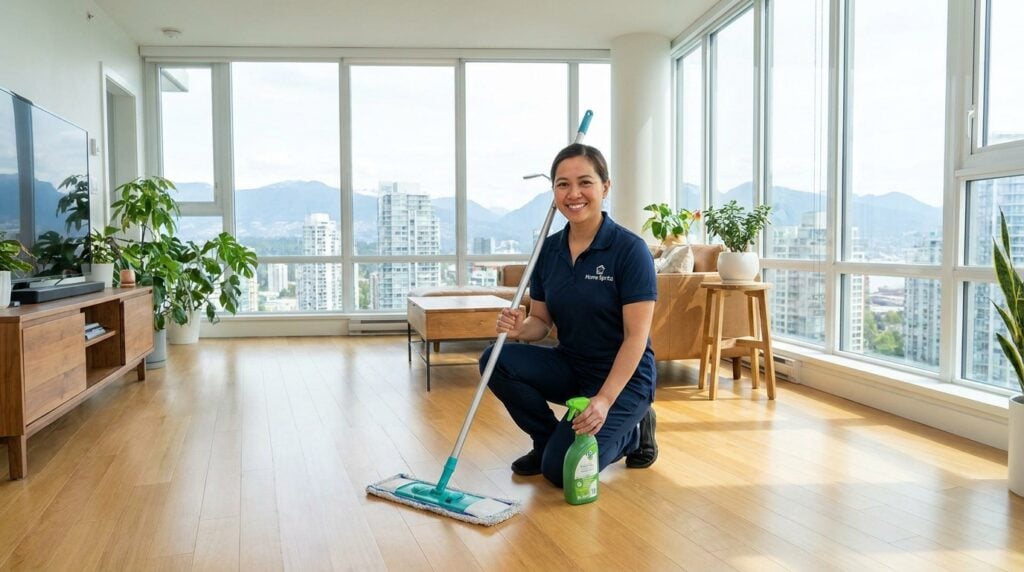
Maintaining pristine floors in a bustling Toronto residence is a relentless battle against gritty winter rock salt, spring mud, and year-round urban dust, leaving many homeowners frustrated and exhausted. Desperate for a lasting shine, you might be tempted to douse your hardwood or tile in harsh, store-bought chemicals, but these toxic formulas leave behind dangerous volatile organic compounds (VOCs), degrade expensive floor finishes over time, and pose severe health risks to your crawling toddlers and pets. The definitive solution lies in adopting proper eco friendly floor cleaning practices toronto, utilizing minimalist, scientifically-backed methods—like a single drop of dish soap in warm water—that effortlessly eliminate grime, preserve your home’s indoor air quality, and protect your most valuable surfaces without relying on destructive ingredients.
- Embrace the Minimalist Approach: A single drop of Dawn dish soap mixed with warm water is the safest and most effective eco-friendly solution for cleaning all hard flooring surfaces in your home.
- Avoid Destructive DIY Trends: Never use vinegar or bleach on your floors; vinegar chemically etches natural stone and strips hardwood finishes, while bleach should be strictly reserved for toilet bowls.
- Master Microfiber Maintenance: Utilizing and properly laundering microfiber mop heads eliminates the need for harsh chemicals while drastically extending the lifespan of your flooring and cleaning tools.
Why is Sustainable Floor Maintenance Essential for Modern Toronto Homes? (The True Cost of Harsh Chemicals)
As the Greater Toronto Area continues to grow, modern residents are increasingly aware of how their lifestyle choices impact both the local environment and their immediate indoor health. Toronto homes, especially newer high-rise condominiums and tightly sealed, energy-efficient houses, are designed to retain heat during our bitter Canadian winters and keep cool air indoors during humid summers. While excellent for energy conservation, this architectural efficiency means that any airborne pollutants introduced into the home are trapped inside. When you mop your floors with conventional, highly fragranced, and chemically aggressive commercial floor cleaners, you are inadvertently releasing a cocktail of volatile organic compounds (VOCs) into your living space. These chemical residues linger on your floors and evaporate into the air, potentially triggering respiratory distress, aggravating asthma, and causing allergic skin reactions, particularly in vulnerable family members like infants and pets who spend significant time near the ground.
The true cost of using harsh chemicals extends far beyond your family’s health; it actively damages the structural integrity of your home. Commercial cleaners frequently contain synthetic waxes, heavy silicones, and aggressive solvents that promise a temporary, artificial shine. Over time, these substances build up, creating a cloudy, sticky film that ironically attracts more dirt from the bustling Toronto streets. When residents notice this dullness, the instinct is often to use even harsher chemicals to strip the floor, trapping homeowners in a vicious, expensive cycle of floor degradation. Sustainable floor maintenance breaks this cycle entirely. By prioritizing non-toxic, gentle methods, you are not only safeguarding your indoor air quality but also ensuring that your home’s infrastructure ages gracefully. For families looking to outsource this vital task without compromising their health, partnering with professionals who specialize in eco-friendly cleaning services in Toronto & the GTA is a transformative investment in long-term household wellness.
What are the Best Concentrated Eco-Friendly Floor Solutions? (Why One Drop of Dawn is All You Need)
When transitioning to eco friendly floor cleaning practices toronto, the most difficult hurdle for many homeowners to overcome is the misconception that heavy suds and intense artificial fragrances equal a “clean” floor. In reality, modern cleaning science dictates that less is undeniably more. The absolute best, most effective, and environmentally responsible floor cleaner you can use on hardwood, laminate, luxury vinyl plank (LVP), ceramic tile, or natural stone is astonishingly simple: warm water mixed with exactly one drop of Dawn dish soap. This minimalist formulation is all that is required to achieve a flawless, streak-free finish.
To understand why this is so effective, we must look at the chemistry of cleaning. Dawn dish soap is a highly concentrated, pH-neutral surfactant. Surfactants work by lowering the surface tension of water, allowing it to spread evenly across your floor rather than beading up. Furthermore, the soap molecules possess a hydrophilic (water-loving) end and a hydrophobic (water-repelling, oil-loving) end. When applied to your floors, these molecules immediately seek out and bind to the oils, dirt, and winter salt tracked in from Toronto sidewalks. They encapsulate the grime into microscopic clusters called micelles, which are then effortlessly lifted away by your mop. Because you are using only a single drop, there is no excessive soapy residue left behind to create a cloudy film. Your floors dry crystal clear, showcasing their natural beauty.
Using this ultra-concentrated, eco-friendly solution completely eliminates the need for single-use plastic bottles of specialized floor cleaners that clutter our landfills and pollute Lake Ontario. It streamlines your cleaning routine, saving you valuable time and money. If you are navigating a hectic schedule, simplifying your cleaning arsenal is a game-changer. For additional insights on streamlining your household management, exploring Toronto house cleaning: a guide for busy professionals can provide robust strategies for maintaining an impeccable home without the stress of managing a massive inventory of toxic cleaning supplies. Remember, when addressing vertical surfaces like cupboards and walls, you don’t even need the soap; plain warm water applied with a damp microfiber cloth is perfectly sufficient to remove everyday fingerprints and dust.
How Should You Practice Proper Microfiber Mop Head Care? (Extending the Lifespan of Your Tools)
The success of the one-drop dish soap method relies heavily on the physical tool you use to apply it. Traditional string mops or sponge mops are notorious for pushing dirty water around and leaving floors overly saturated—a death knell for sensitive Toronto hardwood floors. The cornerstone of sustainable floor care is the flat microfiber mop. Microfiber is an extraordinary synthetic material, featuring strands that are incredibly fine—often microscopically split to create millions of tiny hooks and crevices. These microscopic hooks physically grab and hold onto dust, bacteria, and allergens rather than just smearing them across the floor.
However, the efficacy of microfiber is entirely dependent on how you care for it. Improper washing will destroy the structural integrity of the fibers, rendering your mop head useless. To maintain your microfiber mop heads, you must adhere to strict laundering rules. First, always wash microfiber separately from cotton towels or clothing; cotton sheds lint, which will instantly clog the microfiber hooks. Second, wash them in warm water using a mild, eco-friendly detergent. Third, and most importantly, never use fabric softeners or dryer sheets. Fabric softeners coat fabrics in a layer of synthetic lipids (fats) designed to make clothes feel soft. If these lipids coat your microfiber mop head, it will permanently lose its absorbency and its ability to trap dirt. Finally, allow your mop heads to air dry, or tumble dry them on the lowest possible heat setting to prevent the synthetic fibers from melting. With proper care, a high-quality microfiber mop head can last for hundreds of washings, drastically reducing waste and supporting sustainable home maintenance.
How Does Eco-Friendly Cleaning Help in Protecting Flooring Longevity? (Avoiding Vinegar and Bleach Disasters)
Protecting the longevity of your flooring investment requires a firm understanding of what not to use, as much as knowing what to use. The internet is flooded with DIY cleaning hacks that masquerade as “eco-friendly” but are actually highly destructive. As a premier cleaning authority, Home Spritz emphasizes strict rules regarding the application of common household chemicals to ensure your home remains undamaged.
The most widespread and damaging myth in the green cleaning space is the use of white vinegar as a universal floor cleaner. Vinegar is a strong acetic acid, typically sitting around a 2.5 on the pH scale. While it is natural, acidity is incredibly hostile to modern flooring. If you apply vinegar to hardwood floors, the acid will slowly eat away at the polyurethane protective finish. Over time, this stripping effect leaves the raw wood exposed to moisture, leading to warping, splintering, and permanent discoloration. For natural stone floors like marble, travertine, or limestone, vinegar is catastrophic; the acid reacts with the calcium in the stone, causing permanent chemical burns known as “etching.” According to our stringent cleaning protocols, vinegar must be exclusively reserved for dissolving hard water mineral scale (such as calcium buildup on bathroom faucets or showerheads) and should never be allowed near stone or hardwood floors.
Similarly, bleach is frequently misused by homeowners hoping to aggressively disinfect bathroom tile floors or entryway grout. Bleach is a harsh, toxic, and highly alkaline chemical that causes severe respiratory irritation and degrades indoor air quality. When applied to floors, it breaks down the structural integrity of grout, causing it to crack and crumble over time, while simultaneously stripping the protective sealants off of tiles. Our absolute rule for household safety dictates that bleach is for toilet bowls ONLY. It is never to be used for general surface or floor cleaning.
By strictly avoiding these damaging substances and relying on the gentle power of warm water and a single drop of Dawn dish soap, you protect the structural integrity and aesthetic beauty of your home. Replacing damaged hardwood or re-grouting a bathroom is an incredibly disruptive and expensive undertaking. By adopting these safe, sustainable practices, you maximize the lifespan of your materials. Understanding the economics of home maintenance is crucial; preventing damage through proper care is vastly cheaper than repairing it. For a deeper understanding of how professional standards influence home economics, reviewing the house cleaning cost in Toronto 2026: rates & pricing will demonstrate the undeniable value of expert, damage-free maintenance.
Frequently Asked Questions About Eco-Friendly Floor Cleaning Practices in Toronto
Is vinegar safe to use on my hardwood or natural stone floors?
No, vinegar is absolutely not safe for hardwood or natural stone floors. Vinegar is highly acidic and will chemically eat away the protective polyurethane finish on hardwood, leaving the wood vulnerable to permanent water damage and dullness. On natural stone like marble or travertine, vinegar causes a chemical reaction called etching, which permanently burns and dulls the stone. Vinegar should only be used for treating hard water mineral scale on fixtures, never on flooring.
How do I clean winter salt stains off my entryway floors without harsh chemicals?
To safely remove harsh winter rock salt from your Toronto entryway, you do not need aggressive chemicals. Simply use a flat microfiber mop lightly dampened with warm water and exactly one drop of Dawn dish soap. The warm water dissolves the salt crystals, while the microscopic fibers of the mop lift the abrasive residue away without scratching your floors. Ensure the mop is only damp, not soaking wet, to protect the flooring material from moisture damage.
What is the most cost-effective and eco-friendly floor cleaning method?
The most cost-effective and environmentally friendly method is combining plain warm water with a single drop of Dawn dish soap, applied using a washable, reusable microfiber mop. This eliminates the need to purchase expensive, single-use plastic bottles of commercial floor cleaners. For vertical surfaces like walls and cupboards, the method is even simpler: plain warm water on a damp microfiber cloth is all that is required.
Can I use bleach to sanitize my bathroom tile floors?
No, you should never use bleach to clean or sanitize any floors in your home, including bathroom tiles. Bleach is a highly caustic chemical that emits dangerous VOCs and will physically break down and destroy your tile grout over time, leading to expensive repairs. Strict professional cleaning guidelines mandate that bleach is to be used for toilet bowls ONLY. For your floors, the combination of warm water, one drop of dish soap, and a clean microfiber mop provides excellent, safe cleaning power.