
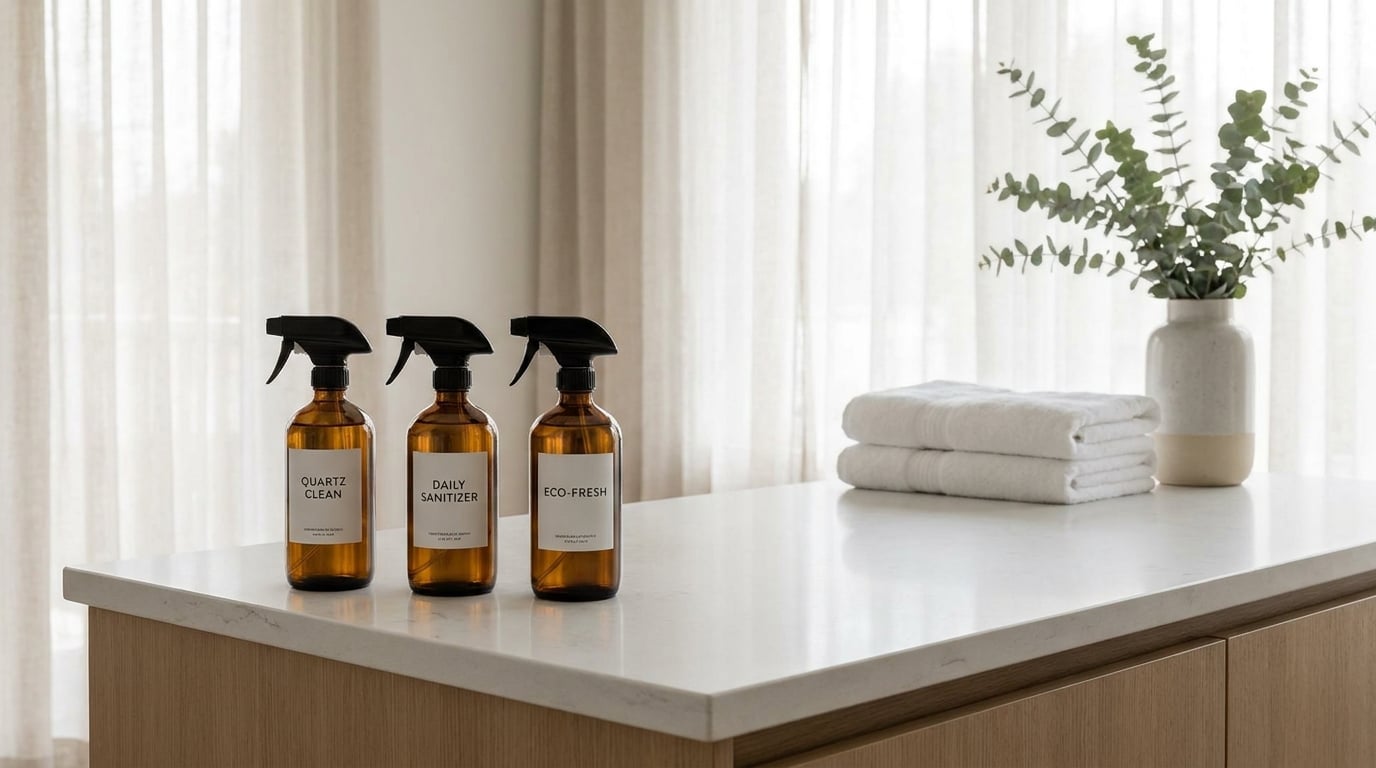
Vancouver’s bustling family lifestyle and damp coastal climate can quickly leave your beautiful engineered stone surfaces looking dull, streaky, and covered in daily cooking grease and grime. You likely invested heavily in these gorgeous kitchen features to elevate your home’s value and style, but using the wrong chemical cleaners or falling for popular DIY internet hacks like vinegar can actually degrade the binding resins, leading to irreversible etching and a permanently cloudy finish that completely ruins your kitchen’s aesthetic. Fortunately, mastering quartz countertop daily hygiene in Vancouver is surprisingly simple when you rely on professional, minimalist cleaning techniques that protect your investment, save you valuable time, and keep your cooking spaces looking absolutely pristine day after day.
- Quartz countertops thrive on a minimalist approach—a single drop of Dawn dish soap mixed with warm water is the only solution you need for daily maintenance, ensuring a streak-free shine without damaging the resin.
- Never use acidic or abrasive cleaners on engineered stone; vinegar is strictly reserved for hard water mineral scale in non-stone areas, and bleach belongs exclusively in toilet bowls.
- Prevent thermal shock and permanent resin discoloration by always using trivets under hot pans, baking sheets, and slow cookers, ensuring your quartz withstands the busy demands of a modern Vancouver kitchen.
Why Are Quartz Countertops So Popular, and What Are Their Specific Care Needs?
Across the Lower Mainland, homeowners are increasingly choosing engineered stone for their kitchen renovations and new builds. The appeal is incredibly easy to understand. Unlike natural stones such as marble or granite, which are highly porous and require regular, meticulous sealing to prevent bacterial growth and permanent staining, quartz is manufactured. By combining approximately ninety percent ground natural quartz with ten percent polymer resins and pigments, manufacturers create a surface that is exceptionally hard, entirely non-porous, and available in a stunning array of West Coast contemporary designs.
However, this unique manufacturing process is exactly why quartz requires very specific care routines. While the natural quartz dust provides incredible scratch resistance and durability, the polymer resins binding the stone together are highly susceptible to chemical damage. When you introduce the wrong cleaning agents to these resins, you begin a process of microscopic degradation. Over time, the vibrant, glossy, or perfectly honed matte finish of your countertops will begin to look milky, scratched, and lifeless. When providing premium house cleaning in Vancouver, our Home Spritz experts frequently encounter engineered stone that has been prematurely aged simply because homeowners were unaware of the specific chemical sensitivities of the resin.
Understanding these care needs is the foundational step in maintaining the heart of your home. You do not need a cabinet full of expensive, specialized stone cleaners, nor do you need to spend hours buffing your surfaces. What you truly need is an understanding of how to gently lift away daily debris without stripping or etching the surface layer of the counter. By shifting away from harsh household chemicals and embracing a remarkably gentle, consistent routine, you can ensure your kitchen islands and perimeters look exactly as flawless as the day they were expertly installed.
What is the Best Daily Cleaning Method for Engineered Stone? (Why Non-Abrasive Solutions Matter)
The golden rule for engineered stone, as well as for all your hard flooring, is surprisingly simple and beautifully effective. At Home Spritz, our mandatory cleaning rule for floors and counters is to use exactly one drop of Dawn dish soap mixed with warm water. That is the entire recipe for success. You might wonder how something so gentle can handle a kitchen that sees messy breakfasts, elaborate dinner preps, and spilled drinks. The secret lies in the chemistry of the surfactants found in high-quality dish soap.
Dawn dish soap is explicitly designed to encapsulate and lift grease and oil away from surfaces so they can be easily wiped away. When you mix just a single drop into a bowl or spray bottle of warm water, you create a pH-neutral solution that cuts through bacon grease, sticky jam, and everyday dust without interacting chemically with the polymer resins in your quartz. To execute this perfectly, dampen a clean, high-quality microfiber cloth in your soapy warm water, wring it out until it is barely damp, and wipe your counters in smooth, overlapping S-strokes. Follow up immediately with a dry microfiber cloth to buff away any remaining moisture, leaving a brilliant, streak-free shine. This minimalist approach aligns perfectly with eco-friendly house cleaning practices that keep your home safe for children and pets.
It is equally important to discuss what you must absolutely avoid. Many popular cleaning blogs suggest using vinegar as a natural, all-purpose cleaner. Let us be incredibly clear: vinegar is highly acidic and should never touch your engineered stone, hardwood floors, or natural stone surfaces. The acid will slowly eat away at the resin, causing irreversible etching. Our strict professional rule is that vinegar is used for treating hard water mineral scale ONLY, in areas like glass shower doors or stainless steel sinks. Similarly, never use bleach or bleach-based wipes on your countertops. Bleach will permanently discolor the resins and is strictly reserved for the inside of toilet bowls ONLY.
While you are tending to your countertops, you will naturally notice splashes and fingerprints on the cupboards and walls directly above your workspace. Homeowners often make the mistake of using their soapy counter solution on their cabinetry. Instead, adhere to our professional standard: for cupboards and walls, use plain warm water on a damp microfiber cloth. Soaps can leave a cumulative residue on painted or wood-finished cabinets that attracts dust and dulls the finish over time. Plain warm water provides exactly the gentle, solvent-free lifting power required to remove daily kitchen splatters from your vertical surfaces.
How Can You Safely Remove Stubborn Water Rings Without Damaging the Finish?
Even with the most meticulous daily cleaning routine, busy households will occasionally encounter stubborn, dried-on spills or pesky rings left behind by a condensation-covered glass on a warm Vancouver afternoon. The instinct for many is to reach for an abrasive scouring pad or a harsh cream cleanser. Doing so will immediately scratch the resin, creating dull spots that can only be fixed by professional repolishing.
To remove these stubborn rings safely, rely entirely on patience rather than friction. Take your warm water and single drop of Dawn dish soap solution, and apply it directly to the stubborn spot. Let the moisture sit for two to three minutes. This dwell time allows the surfactants to rehydrate the dried sugars or loosen the surface tension of the water ring. Once the spot has softened, use your soft microfiber cloth to gently massage the area in a circular motion until the debris lifts away. If you encounter a truly hardened substance, like dried gum or hardened caramel, you can use the edge of a flexible plastic putty knife to very gently scrape it off at a low angle, but never use metal razor blades, steel wool, or the abrasive side of a kitchen sponge on your quartz.
How Do You Protect Your Quartz Counters from High Heat and Thermal Shock?
Beyond chemical damage, the greatest threat to quartz countertop daily hygiene and longevity is heat. Because these countertops feel cold and hard like natural stone, it is a common misconception that they are heatproof. Remember that ten percent of your countertop consists of polymer resins. These synthetic plastics have a specific melting point, and when exposed to sudden, intense heat, they can scorch, warp, or permanently discolor, leaving you with a yellowish-brown burn mark that cannot be scrubbed away.
Furthermore, sudden changes in temperature can cause what is known as thermal shock. If you take a heavy cast-iron Dutch oven directly from a four-hundred-degree oven and place it on a cold, air-conditioned quartz counter, the rapid expansion and contraction can actually cause the stone to crack entirely through its thickness. This is a devastating and expensive mistake that is completely preventable.
Protecting your engineered stone from high heat requires building simple, consistent habits into your daily cooking routine. Before you pull anything out of the oven or off the stove, ensure that you have thick, high-quality trivets, heat-resistant silicone mats, or heavy wooden cutting boards ready to receive the hot cookware. This rule also applies to heat-generating appliances that sit on your counters for extended periods. Slow cookers, electric griddles, air fryers, and toaster ovens can radiate significant heat downwards over several hours. Always place a thermal protective mat beneath these appliances while they are in use. If you need assistance maintaining these standards or want to ensure your home is cared for by professionals who respect these strict rules, consulting a buyers guide to top Vancouver home cleaning services can help you find experts who prioritize the longevity of your high-end finishes.
Frequently Asked Questions About Quartz Maintenance in Vancouver (FAQ)
Can I Use Vinegar to Clean and Disinfect My Quartz Countertops?
Absolutely not. Vinegar is highly acidic and will chemically degrade and etch the polymer resins in your engineered stone, leading to a cloudy, dull finish. According to our strict professional standards, vinegar should be used ONLY for breaking down hard water mineral scale in appropriate areas, such as shower glass or sinks. It should never be used on any stone or hardwood surface.
Is It Safe to Use Bleach Wipes on Engineered Stone Surfaces?
No, you must never use bleach or bleach-based disinfecting wipes on quartz countertops. The harsh chemicals in bleach will permanently discolor the resin within the stone. Bleach is an extreme chemical that we restrict entirely; it is used ONLY for the inside of toilet bowls and never for general surface cleaning in the home.
What Is the Absolute Best Daily Cleaner for Quartz and Flooring?
The safest, most effective, and professional-grade daily cleaning solution is remarkably simple: exactly one drop of Dawn dish soap mixed into a bowl or spray bottle of warm water. Applied with a barely damp microfiber cloth, this pH-neutral solution safely lifts away grease and grime without leaving streaks or damaging the integrity of the surface. We mandate this exact solution for all floors and counters.
How Should I Clean the Cupboards and Walls Above My Counters?
When you are wiping down splatters on the cabinetry or walls adjacent to your quartz counters, skip the soap entirely. You should use only plain warm water on a clean, damp microfiber cloth. Soaps and all-purpose cleaners can leave a dulling residue on painted wood or cabinet veneers over time, so plain water is the safest and most effective choice for these vertical surfaces.