
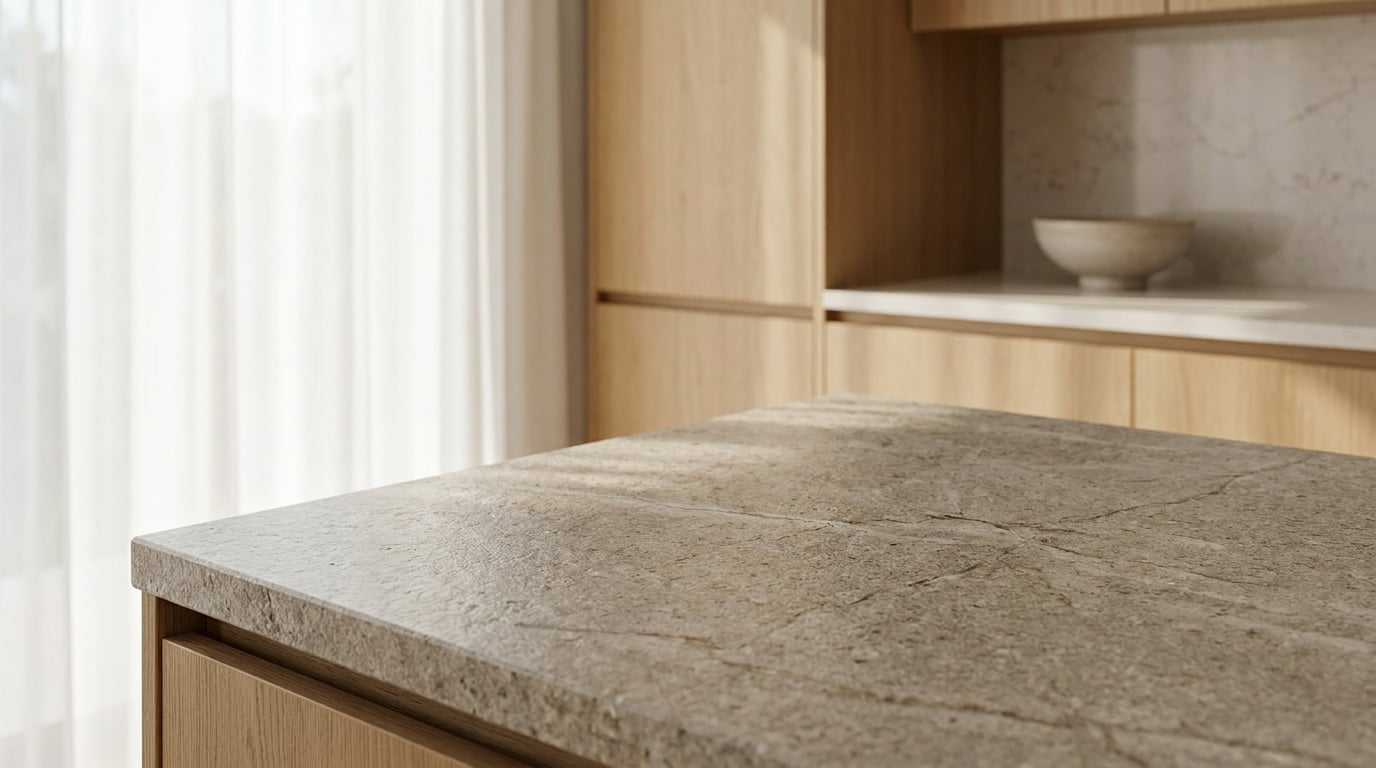
Edmonton homeowners know that the kitchen is the true heart of the house—especially during our long, chilly Alberta winters when families gather indoors to cook, bake, and entertain. Upgrading to natural granite countertops is a major investment that adds incredible value and a touch of luxury to your property. However, the initial excitement of a kitchen renovation can quickly give way to a persistent, daily worry. Suddenly, every time someone chops a lemon, pours a glass of Cabernet, or carelessly leaves a wet dish sponge beside the sink, you find yourself hovering nearby, terrified of permanent damage to your beautiful stone.
The stakes are surprisingly high when it comes to natural stone care. Using the wrong over-the-counter cleaning spray can permanently etch your gorgeous counters, instantly dulling their reflective finish. Add to that the unique local challenge of Edmonton’s notoriously hard municipal tap water, and even innocent splashes left to air-dry can result in cloudy, crusty calcium build-ups that regular scrubbing just won’t remove. Modern Canadian families are busier than ever; you shouldn’t have to spend your limited free time meticulously researching the pH level of every bottle under your sink just to safely wipe down the kitchen island. When cleaning your own home becomes a source of anxiety rather than a refreshing reset, the luxury of your space is lost.
The good news? Keeping your natural granite looking factory-new is far simpler than the commercial cleaning industry wants you to believe, and it entirely bypasses the need for harsh, expensive chemicals. As a trusted local authority in Canadian home care, Home Spritz specializes in maintaining the pristine condition of high-end finishes without the stress. We have curated the ultimate, foolproof daily care routine specifically tailored for the local environment. In this guide, we will break down the exact steps, tools, and local hacks you need to protect your investment with total confidence.
Understanding Natural Stone Vulnerability to Acid
Natural stone like granite is forged underground by extreme heat and pressure, giving it incredible resistance to hot pots and daily wear-and-tear. However, its organic chemical composition makes it surprisingly reactive to acids. Because granite is naturally porous, it contains trace minerals that can physically dissolve when they come into contact with acidic substances. Homeowners often confuse the types of damage that can occur, so it is important to distinguish between the two primary threats:
- Staining: This happens when a liquid (like cooking oil, coffee, or red wine) absorbs deep into the unsealed pores of the granite, leaving a dark, discolored spot beneath the surface.
- Etching: This is actual, physical damage to the stone. When acids touch the minerals in the granite, a localized chemical reaction eats away at the polished seal and the stone itself. This leaves a dull, chalky, or slightly rough mark that looks like a permanent water ring, but cannot be simply washed away.
Common household culprits for etching include citrus juice, vinegar, tomato sauce, and many commercial bathroom or kitchen cleaners. In fact, while Health Canada’s guidelines on household chemical safety emphasize that standard disinfectants (like diluted bleach or ammonia) can effectively kill germs on typical hard surfaces, these conventional sanitizers are often a disaster for natural stone. Bleach and acidic descalers rapidly strip away your protective sealant and corrode the granite over time.
This is exactly why scheduling regular house cleaning in Edmonton requires a professional team with specialized knowledge. An untrained cleaner might aggressively spray a vinegar-based glass cleaner across your entire kitchen, unknowingly causing thousands of dollars in micro-etching to your custom stonework. At Home Spritz, our thoroughly vetted professionals are trained to identify delicate natural stone and exclusively use pH-neutral, stone-safe solutions that protect your home’s most valuable architectural assets.
Daily Warm Water and Mild Soap Wipe-Downs
When it comes to daily countertop maintenance, simplicity is your ultimate defense. You do not need expensive specialty sprays for your post-dinner cleanup. The absolute best daily cleaner for natural granite is a simple mixture of warm water and a few drops of mild, pH-neutral dish soap.
Here is the ideal, expert-approved daily protocol for busy families:
- Clear the Decks: Remove appliances, cutting boards, and mail from the surface to ensure you aren’t accidentally dragging abrasive crumbs or grit across the polish.
- The Soap Solution: Add just two or three drops of mild dish soap to a bowl of warm water, or mix it into a dedicated spray bottle. Expert tip: Avoid using too much soap. Excess lather will inevitably leave a hazy, filmy residue on the polished surface that dulls the shine.
- Gentle Wiping: Use a soft cloth to gently lift away cooking grease, sticky food remnants, and daily household dust.
- The Crucial Drying Phase: Never, ever let your countertops air dry. Thoroughly dry the surface immediately with a separate cloth.
Why is the drying phase so absolutely critical in our city? According to EPCOR’s daily water quality reports, the North Saskatchewan River provides Edmonton with moderately hard water, averaging a robust 165 milligrams of calcium carbonate per litre. When local tap water is left to evaporate naturally on your granite, the water disappears, but those dissolved calcium and magnesium minerals are left firmly behind. Over time, these daily mineral deposits stack up into stubborn, crusty white rings around your faucets and sink basins.
By thoroughly drying the counter with a clean towel immediately after washing, you eliminate the risk of hard water stains entirely. This meticulous attention to detail is exactly what you should expect from a top-rated maid service in Edmonton. Our Home Spritz professionals know exactly how to manage local water hardness, ensuring your home is left sparkling without a trace of streaks or mineral buildup.
Testing Granite Sealant Integrity
Even with the most careful daily cleaning routine, natural granite relies heavily on a high-quality, impregnating sealant to act as an invisible shield against moisture and oil. Because daily wiping, friction, and mild soaps can gradually wear down this barrier over time, you need to check its strength regularly.
We recommend performing the simple “Water Drop Test” every three to six months to ensure your stone remains protected:
- Clear and dry a small section of your countertop, preferably in a high-use area (like immediately next to the stove or the main sink).
- Pour a single tablespoon of regular tap water directly onto the granite.
- Observe the water closely for 10 to 15 minutes.
If the water beads up into tight, high domes, your sealant is in perfect condition and doing its job. However, if the water begins to spread out, flatten, or if the stone underneath visibly darkens (indicating that water is absorbing into the pores), it is time to reseal your countertops. Maintaining strong sealant integrity is the single best preventative measure you can take to ensure accidental spills wipe away easily during your daily routine, rather than setting into permanent stains.
Microfiber Polishing Hacks
To achieve that flawless, showroom-ready gleam, the tools you use are just as important as the cleaning solutions. Never use abrasive sponges, steel wool, or the rough green side of a dishwashing sponge on natural stone. These aggressive materials act just like sandpaper against your sealant, stripping it away and leaving micro-scratches in the polish.
Instead, microfiber cloths are a Canadian homeowner’s best friend. Microfiber is uniquely engineered with millions of tiny, split synthetic fibers that carry a slight positive electrostatic charge. This allows them to physically trap microscopic dirt, bacteria, and grease without scratching delicate surfaces, rather than just pushing debris around like traditional cotton cloths.
Try these professional polishing hacks in your own kitchen:
- The S-Pattern Technique: When wiping down your counters, fold your microfiber cloth neatly into quarters. Start at the top corner of your counter and wipe in a continuous “S” or “Z” pattern, moving progressively downward. This pulls all crumbs and debris toward you in one fluid motion.
- The Dry Buff: Keep a completely dry, dedicated microfiber glass-polishing cloth (which has a flatter, tighter weave) on hand. After your wet soapy wipe-down, do a fast, vigorous dry buff over the entire expanse of the granite. This eliminates any lingering soap film and instantly brings out the natural, mirror-like depth of the stone.
- Strict Color-Coding: Assign specific colors of microfiber cloths to specific rooms to avoid cross-contamination. You never want a cloth that was just used to scrub a bathroom vanity ending up anywhere near your kitchen food-prep surfaces.
When researching the best house cleaning services in Edmonton for 2026, assessing a company’s toolkit and sanitation methods is absolutely essential. The top-tier services, like Home Spritz, exclusively use premium microfiber technology and adhere to strict color-coding protocols, ensuring your granite is polished safely, beautifully, and hygienically every single visit.
FAQ
Can I use vinegar to clean my granite countertops?
Absolutely not. White vinegar is highly acidic (with a pH of around 2.5) and will rapidly eat away at the protective sealant on your granite. Repeated use will physically etch the stone, leaving dull, rough patches that look like severe hard water stains and require professional, mechanical restoration to fix. Always stick to pH-neutral cleaners or plain warm, soapy water.
Is Windex or standard glass cleaner safe for natural stone?
Most standard household glass cleaners contain ammonia or other harsh chemical solvents. While they evaporate quickly to prevent streaks on glass, they are far too aggressive for natural stone. Ammonia will slowly strip your granite’s sealant over time, leading to a cloudy, unprotected surface. If you want a streak-free shine, rely on a dry microfiber cloth to buff away smudges.
How often should I seal my granite in Edmonton?
The frequency depends entirely on the color, density, and porosity of your specific stone, as well as how heavily your kitchen is used. Lighter granites (like whites and light grays) tend to be more porous and may require a fresh coat of sealer every six months to a year. Darker granites (like deep blacks or emerald greens) are incredibly dense and might only need sealing every one to three years. Always rely on the water drop test to tell you exactly when your stone needs attention.
What should I do if I spill lemon juice or red wine?
Blot the spill immediately—do not wipe! Wiping an acidic or strongly pigmented liquid will only spread it over a much larger surface area of the stone, increasing the risk of damage. Immediately grab a soft paper towel or cloth and gently press straight down to absorb the liquid. Once the spill is completely lifted, clean the localized area with mild soap and warm water, then dry it thoroughly.
Your natural granite countertops are a stunning feature of your Edmonton home, and with a little bit of mindful daily care, they will stay that way for a lifetime. By keeping acids far away, prioritizing gentle soap, and never letting our local hard water air-dry on the surface, you can preserve that luxurious factory polish. And when you need an extra hand keeping your entire home to that same immaculate standard, the trusted experts at Home Spritz are just a click away.