
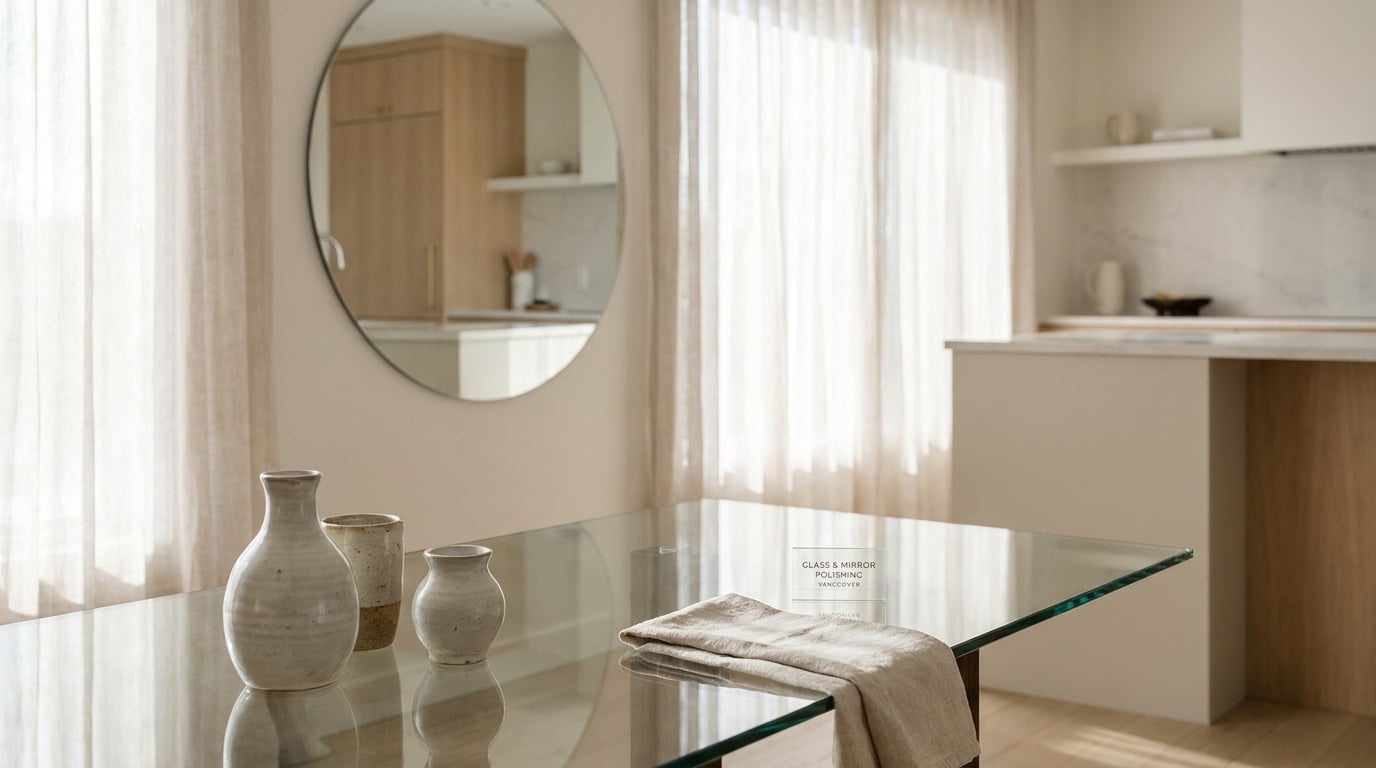
If you live in a beautiful, sunlit Vancouver home, you already know the frustrating cycle of watching your pristine glass tables and mirrors quickly become covered in oily fingerprints, stubborn pet nose smudges, and floating dust. You might try frantically wiping them down with standard paper towels and blue chemical sprays before guests arrive, only to find that the agitated surface now looks cloudy, covered in paper lint, and streaked with glaringly obvious wipe marks once the afternoon sun hits it. The solution to breaking this endless, smudgy cycle is mastering professional glass table and mirror polishing Vancouver techniques—relying on a simple, eco-friendly methodology that permanently eliminates chemical residues and leaves your reflective surfaces flawlessly clear, completely invisible, and brilliantly pristine.
- Ditch the Paper Towels and Sprays: Achieving a flawless, lint-free shine on Vancouver glass surfaces requires abandoning paper products in favor of the professional dual-microfiber cloth method.
- Minimize Your Cleaning Products: Most streaks are caused by leftover chemical residue; using just plain warm water or exactly one drop of Dawn dish soap prevents this cloudy film buildup entirely.
- Adopt the Continuous “S-Pattern” Wipe: Polishing in a top-to-bottom ‘S’ motion rather than erratic circles prevents you from simply redistributing natural skin oils and household dust across your beautiful glass tables and mirrors.
Why Do Glass Surfaces Show So Many Streaks and Fingerprints? (The Science of Smudges)
Living in the Lower Mainland means we get to enjoy spectacular views, and many modern homes and condos maximize this with expansive windows, large mirrors, and elegant glass furniture. However, glass is entirely non-porous. Unlike wood or fabric, which can absorb tiny amounts of moisture or oil, glass forces everything—every natural skin oil from a fingertip, every speck of airborne dust, and every drop of moisture—to sit completely unhidden on its surface. When natural sunlight pours into your home, it refracts off these surface impurities, highlighting every single smudge and smear.
The core problem that most homeowners face isn’t just the dirt itself; it is the method used to remove it. When you spray a traditional commercial glass cleaner onto a mirror and wipe it with a paper towel, you are creating a perfect storm for streaks. Commercial sprays often contain heavy surfactants, artificial fragrances, and dyes. If these are not perfectly buffered and removed, they dry directly onto the glass, leaving behind a microscopic, hazy chemical film. Then, as you scrub with a paper towel, the coarse paper fibers break down, shedding tiny particles of lint that stick directly to that fresh chemical film.
Furthermore, relying on harsh chemicals for everyday cleaning is largely unnecessary and counterproductive. By turning to eco-friendly house cleaning practices, you not only protect the indoor air quality of your home but you also achieve a superior, longer-lasting clean. When you strip away the artificial waxes and heavy soaps found in commercial products, you reveal the true, reflective beauty of the glass. The science of a streak is simply the science of leftover residue; eliminate the residue, and the streaks will vanish.
What is the Dual-Microfiber Wiping Technique? (The Secret to Zero Streaks)
Professional cleaners do not use rolls of paper towels to clean a house, and they certainly don’t use them on delicate reflective surfaces. The absolute gold standard for glass table and mirror polishing Vancouver residents can rely on is the dual-microfiber wiping technique. This method is incredibly simple, highly effective, and requires virtually no expensive products. You only need two distinct cloths: one for washing and one for buffing.
Your first cloth should be a standard, clean microfiber towel dampened with water. Your second cloth must be a dry, flat-weave microfiber cloth (often called a glass cloth or a surgical huck towel). The flat weave is crucial because it has no fluffy fibers to shed onto the glass, ensuring a totally lint-free finish. When executing this technique, you fold your cloths into quarters. This gives you multiple clean, flat surfaces to work with, rather than a bunched-up rag that unevenly distributes pressure.
Begin by wiping the mirror or glass table with the damp cloth to lift the oils, toothpaste splatters, or dust. Once the surface is clean but still slightly wet, immediately follow up with your dry flat-weave cloth. Instead of scrubbing in frantic circles, start at the top corner of the glass and pull the cloth across in a sweeping, horizontal figure-eight or “S-pattern.” Work your way down to the bottom. This directional technique pulls the moisture and remaining debris off the edge of the glass, rather than swirling it endlessly into a frustrating cloudy circle in the center. If you want to dive deeper into how this method transforms small spaces, read our specialized guide on streak-free glass and mirror care for Vancouver condos.
How Should You Go About Polishing Glass Dining and Coffee Tables? (Step-by-Step Guide)
Mirrors hanging vertically usually only accumulate light dust and toothpaste splashes, but horizontal glass surfaces like dining tables and coffee tables take a massive beating. They are subjected to spilled drinks, sticky hands, hot plates, and pet paws. Because of this heavier soil load, plain water sometimes isn’t quite enough to cut through the grease, but you still want to avoid heavy chemical sprays.
Our mandatory, golden rule for cleaning horizontal household surfaces—including floors, counters, and glass dining tables—is to use exactly one drop of Dawn dish soap mixed into a bowl or spray bottle of warm water. Dawn is specifically formulated to cut through heavy grease without leaving a heavy waxy film behind, making it the absolute perfect gentle cleaner for a heavily used glass table.
Start by completely clearing the glass table of all decor, placemats, and coasters. Lightly mist the table with your warm water and single drop of Dawn solution. Take your first microfiber cloth and wipe down the entire table to lift all the sticky food residue and natural skin oils. Pay special attention to the edges and the underside lip of the glass, where fingers naturally grab and leave hidden smudges. Immediately take your dry, flat-weave glass polishing cloth and execute the S-pattern wipe from one end of the table to the other. The microscopic amount of dish soap will break the surface tension of the grease, while the dry buffing cloth will absorb the moisture before it has a chance to evaporate into a streak.
How Can You Handle Daily Spot Maintenance Without Doing a Full Polish? (Quick Fixes)
You don’t need to do a top-to-bottom meticulous polish every single day to keep your home looking brilliant. For busy families, daily spot maintenance is the key to preserving that high-end, professional look. When you notice a random dog nose print on the patio door or a single water splash on the bathroom mirror, resist the urge to grab a heavy cleaner.
For walls, cupboards, and quick daily mirror maintenance, plain warm water applied to a damp microfiber cloth is the only tool you need. Simply breathe lightly onto the smudge to create a small amount of condensation, or tap the spot with a damp corner of your cloth, and quickly buff it out with a dry flat-weave cloth. This takes less than five seconds and prevents the buildup of unnecessary cleaning products.
It is vital to know what NOT to use during your daily maintenance routines. Many people reach for harsh disinfectants thinking they are achieving a deeper clean. However, bleach is incredibly corrosive and toxic; it is strictly meant for toilet bowls ONLY and should absolutely never be used on general surfaces, glass, or mirrors. It will ruin the backing of mirrors and leave a hazardous, streaky film on tables.
Similarly, while vinegar is popular in DIY cleaning, it has a very specific and limited use case. Vinegar should only be used to treat hard water mineral scale—such as the hazy calcium buildup you might find on a glass shower door. Vinegar should never be used on stone counters or hardwood floors, and it isn’t necessary for wiping a simple fingerprint off a living room mirror. By understanding these strict product boundaries, you elevate the care of your home to a professional standard. For more insights on how expert teams manage these details, explore our guide on what you need to know about premium house cleaning in Vancouver.
Frequently Asked Questions About Glass Table and Mirror Polishing in Vancouver
Why is my current glass cleaner leaving a hazy film on my mirror?
Most commercial glass cleaners contain heavy surfactants, synthetic dyes, and artificial fragrances. When the liquid evaporates quickly in a warm or sunlit room, those chemical ingredients are left behind on the glass, creating a hazy, streaky film. Switching to the professional method of plain warm water (or water with one single drop of Dawn dish soap for heavy grease) paired with a flat-weave microfiber cloth completely eliminates this chemical residue.
Can I use bleach wipes or harsh disinfectant sprays to sanitize my glass dining table?
Absolutely not. Bleach is an incredibly harsh, toxic chemical that is strictly reserved for toilet bowls ONLY. It should never be used on general household surfaces, including glass tables or mirrors. Bleach will leave a stubborn, dangerous residue on eating surfaces and can permanently damage the silvering on the back of mirrors. Stick to a simple drop of Dawn dish soap and warm water for safe, effective cleaning.
Is vinegar a good everyday cleaner for my living room glass coffee table?
No, vinegar is not ideal for everyday dust or oily fingerprints on a standard coffee table. Vinegar is an acid that should be used exclusively for breaking down hard water mineral scale (like the stubborn calcium spots on glass shower doors). For a living room glass table, natural skin oils and dust are best removed with plain warm water or one drop of Dawn dish soap. Furthermore, vinegar should never be used near stone counters or hardwood floors as it can etch and ruin the finishes.
What is the absolute best cloth to use for drying and buffing glass?
The best tool is a clean, dry, flat-weave microfiber cloth (sometimes called a glass towel or huck towel). Unlike paper towels, which break down and leave lint behind, or terry-cloth bath towels, which hold onto laundry fabric softeners that cause streaks, flat-weave microfiber absorbs moisture instantly and leaves zero lint on the reflective surface.