
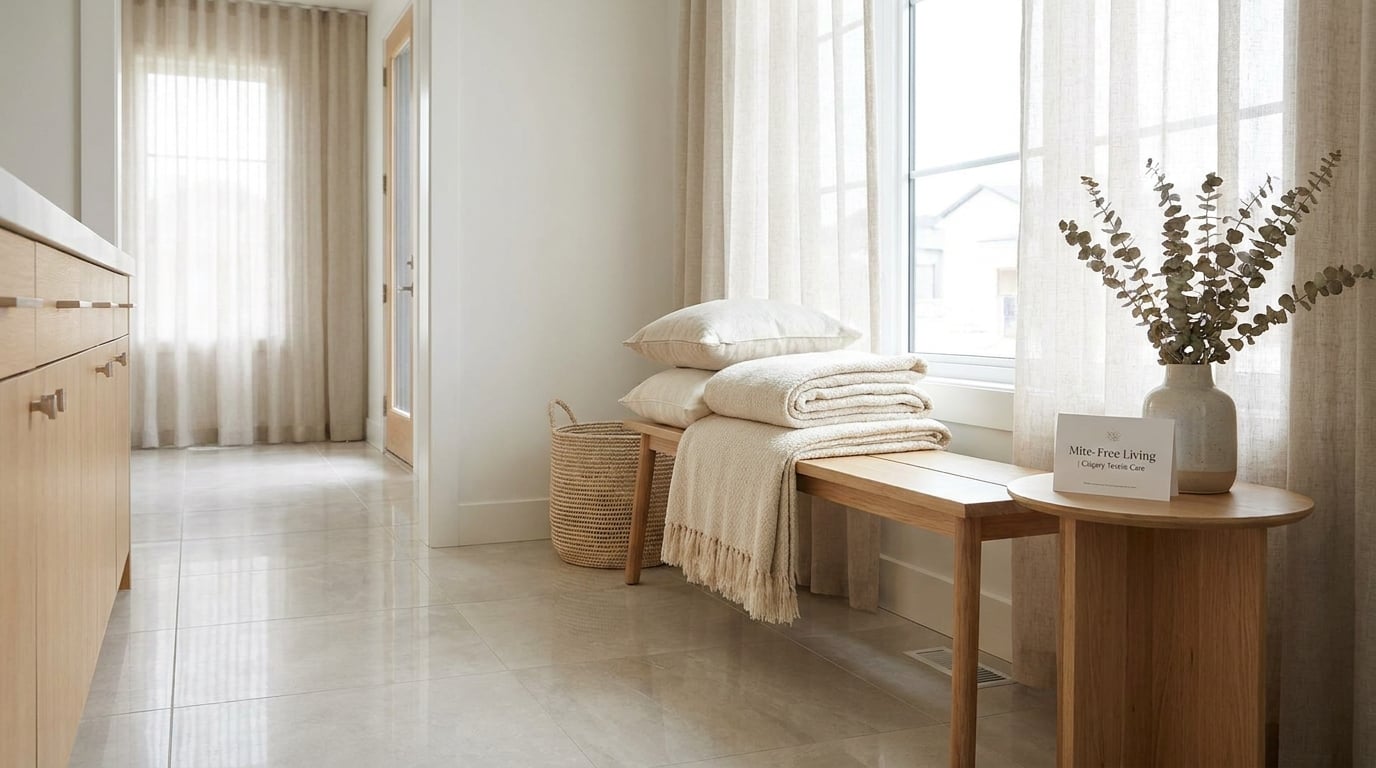
Calgary’s notoriously dry climate might seem unwelcoming to common household pests, but microscopic dust mites can still stubbornly infiltrate your cozy home textiles, triggering relentless allergies and disrupting your family’s much-needed rest. Ignoring these invisible intruders allows them to rapidly multiply deep within your plush mattresses, beloved area rugs, and heavy winter curtains, leading to chronic morning congestion, itchy eyes, and an overall frustrating sense that your living space just isn’t as fresh or hygienic as it should be. Fortunately, by implementing a few targeted, scientifically backed cleaning strategies—ranging from adopting high-heat laundering practices to strategic soft surface management—you can effectively banish these microscopic allergens, breathe easier, and restore your home to a deeply comforting, truly clean sanctuary.
- Implement High-Heat Laundering: Washing bedding and textiles in water temperatures above 55°C (130°F) is scientifically proven to eradicate dust mites and break down their allergy-triggering proteins.
- Utilize True HEPA Filtration: Standard vacuums simply scatter microscopic debris, making HEPA vacuums non-negotiable for deeply extracting dust mites from mattresses, carpets, and upholstery without recirculating them into your home’s air.
- Adopt Minimalist Surface Strategies: Reducing bedroom clutter—such as excess decorative pillows and heavy curtains—while safely maintaining hard surfaces prevents dust accumulation and starves mites of their primary food sources.
Where Do Dust Mites Thrive in Your Calgary Home? (Identifying High-Risk Textiles)
To effectively combat dust mites, Calgary homeowners first need to understand the biology and habits of these microscopic arachnids. Unlike outdoor pests that seek shelter during our freezing Alberta winters, dust mites are a year-round indoor nuisance. They do not bite; instead, they thrive by feeding on the microscopic dead skin cells that humans and pets shed every single day. Because we shed thousands of skin cells daily, the areas where we spend the most time—and shed the most skin—become literal buffets for these allergens. In your home, the most high-risk zones are predominantly soft textiles that safely trap moisture, warmth, and skin flakes.
Your bed is undoubtedly ground zero for dust mite colonies. Mattresses, thick duvet inserts, and plush pillows provide the perfect dark, warm, and humid microclimate (created by your body heat and nighttime perspiration) for dust mites to multiply by the millions. Beyond the bedroom, heavy living room curtains, fabric sofas, and dense, wall-to-wall carpets or shaggy area rugs serve as secondary havens. Calgary’s long winters mean our homes stay sealed up tight with the furnace running constantly, which continuously circulates airborne dust and settles it deep into these textile fibers.
Identifying these high-risk areas is the critical first step in taking back your home’s air quality. While regular tidying is helpful, true allergen reduction requires a more intensive, methodical approach. For homeowners feeling overwhelmed by the sheer volume of deep cleaning required to tackle every mattress and rug, booking expert house cleaning in Calgary can provide the meticulous, heavy-duty baseline clean your house needs. Professional cleaners know exactly where dust settles and can systematically address these overlooked textile traps, giving you a fresh, breathable start.
How Can High-Heat Bedding Wash Routines Kill Dust Mites? (Temperature & Frequency Guide)
When it comes to neutralizing dust mites in your bedding, water temperature is the ultimate weapon. Cold or even warm water washes may clean away superficial dirt, but they are generally ineffective at actually killing living dust mites or washing away their allergenic waste particles. To successfully eradicate them, you must subject your bed sheets, pillowcases, and duvet covers to high-heat washing routines. Scientific studies indicate that dust mites cannot survive temperatures exceeding 55°C (130°F). Therefore, checking your hot water heater settings and utilizing the “hot” cycle on your washing machine is essential for anyone suffering from indoor allergies.
For optimal results, establish a strict weekly washing schedule for all sheets and pillowcases. Heavier items, such as mattress protectors, duvet inserts, and soft blankets, should be laundered on a hot cycle at least once a month. If your washing machine does not reach the required temperature, placing the dry bedding in a hot tumble dryer for 15 to 20 minutes before washing can also effectively kill the mites, allowing the subsequent wash cycle to safely rinse away the neutralized allergens.
While managing your laundry, it’s also important to maintain the cleanliness of your laundry room environment to prevent dust buildup on freshly washed items. If you notice dust settling on your laundry room cupboards or walls, skip the harsh chemical sprays. The absolute best way to clean cupboards and walls is by gently wiping them down with plain warm water using a damp microfiber cloth. This method safely traps dust without damaging paint or delicate wood finishes. If you are looking for more ways to keep your home’s maintenance gentle and safe, exploring eco-friendly house cleaning in Calgary can provide excellent strategies for marrying tough allergen removal with safe, non-toxic household practices.
Why is HEPA Vacuuming for Mattresses & Rugs Crucial for Allergy Relief? (Proper Extraction Methods)
Washing takes care of removable linens, but what about the bulky, un-washable textiles like mattresses, fabric headboards, and heavy area rugs? This is where vacuuming becomes critical—but not just any vacuuming. Using a standard vacuum cleaner on a dust-mite-infested mattress can actually worsen your allergies. Standard filters allow microscopic dust mite particles and their waste to pass straight through the exhaust, blasting them directly back into your breathing zone. To achieve true allergy relief, utilizing a vacuum equipped with a High-Efficiency Particulate Air (HEPA) filter is non-negotiable. HEPA filters are certified to trap 99.97% of particles as small as 0.3 microns, ensuring that once the mites are sucked up, they are permanently removed from your living environment.
When vacuuming a mattress or a deep-pile rug, technique matters just as much as the equipment. Use the clean upholstery attachment for your mattress and utilize slow, deliberate, overlapping strokes. Rushing the process doesn’t give the suction enough time to pull the microscopic allergens from deep within the foam or spring fibers. Pay special attention to the seams, tufts, and piping around the edges of the mattress, as dust mites love to congregate in these dark, protected crevices. You should aim to HEPA-vacuum your mattress every time you rotate it, or at least once every season.
For carpets and rugs, slow passes are equally important. If your home features area rugs layered over hard flooring like laminate, vinyl, or hardwood, you need to actively manage the dust that filters through the rug backing onto the floor beneath. When cleaning these hard floors or nearby counters, stick to the strict Home Spritz golden rule: use only one drop of Dawn dish soap mixed with warm water. This simple, safe solution lifts dust and grime beautifully. Never use vinegar on your hardwood or stone floors, as its acidity will degrade the protective finish over time (vinegar should be strictly reserved for treating hard water mineral scale on plumbing fixtures).
What Are the Best Strategies for Reducing Soft Surface Clutter in Bedrooms? (Creating an Allergen-Free Oasis)
The most effective way to manage dust mites long-term is to simply give them fewer places to live. While you cannot eliminate every soft surface in your home, you can dramatically reduce unnecessary textile clutter, particularly in bedrooms where allergy symptoms tend to be most severe. The concept is straightforward: fewer fabrics mean fewer skin cells trapped, which equals fewer dust mites multiplying in the shadows.
Begin by evaluating your bed’s decorative elements. While a mountain of throw pillows and thick, textured throws might look worthy of a design magazine, they are a nightmare for allergy sufferers. Each decorative pillow represents another soft surface that requires weekly hot-water washing or meticulous HEPA vacuuming. By stripping your bedding down to the functional essentials—a high-quality fitted sheet, a washable duvet, and standard sleeping pillows encased in zippered dust-mite-proof covers—you instantly cut your allergen exposure and weekly cleaning time in half. Similarly, limiting the number of stuffed animals in children’s rooms is crucial. If your child has a favorite plush toy, ensure it is machine washable on hot, or place it in a sealed bag in the freezer overnight once a week to quickly neutralize mites.
Beyond the bed, closely look at your window treatments and floor surfaces. Swapping out heavy, unwashed fabric drapes for easy-to-wipe hard blinds or roller shades eliminates a massive vertical dust trap. Keep bedroom nightstands and dressers free of excessive knick-knacks to make weekly dusting faster and far more effective. Remember, when dusting these hard surfaces, such as nightstand tops or counters, you only need one drop of Dawn dish soap and warm water applied with a microfiber cloth. Avoid reaching for bleach-based sprays for general dusting or surface cleaning; bleach is highly toxic to breathe in a bedroom environment and should be reserved exclusively for disinfecting inside toilet bowls. By streamlining your space and employing proper cleaning rules, you make maintaining an allergen-free sanctuary highly achievable. To see how top-rated professionals handle decluttered, streamlined spaces, you might review the best house cleaning services in Calgary to find a partner who understands the immense value of meticulous, allergy-conscious cleaning.
Frequently Asked Questions About Reducing Dust Mites in Calgary Homes
Do dust mites die in the cold Calgary winter air?
While dust mites cannot survive freezing outdoor temperatures, your indoor environment tells a different story. Calgary’s cold winters mean we keep our homes heated and windows closed, creating a warm, stable indoor climate. While the dry indoor air can slow their reproduction compared to humid summer months, they continue to thrive deep within warm mattresses and carpets. Consistent indoor cleaning remains vital year-round.
Should I use vinegar or bleach to kill dust mites on my bedroom floors?
Absolutely not. Bleach should never be used for general surface cleaning; it is strictly for toilet bowls. Vinegar is also inappropriate for flooring and should only be used for tackling hard water mineral scale in bathrooms, as its acidity can ruin hardwood and stone finishes. To clean dust and allergens from hard floors and counters, use a safe, effective mixture of exactly one drop of Dawn dish soap and warm water.
How often should I wash my curtains to prevent dust mite buildup?
Heavy fabric curtains are notorious dust traps. To keep allergens at bay, you should take them down and wash them according to their care instructions every 3 to 6 months. If they are not machine washable, HEPA vacuum them thoroughly using a brush attachment every month. For the best allergy relief, consider replacing heavy textiles with hard blinds that can be easily wiped down with plain warm water.