
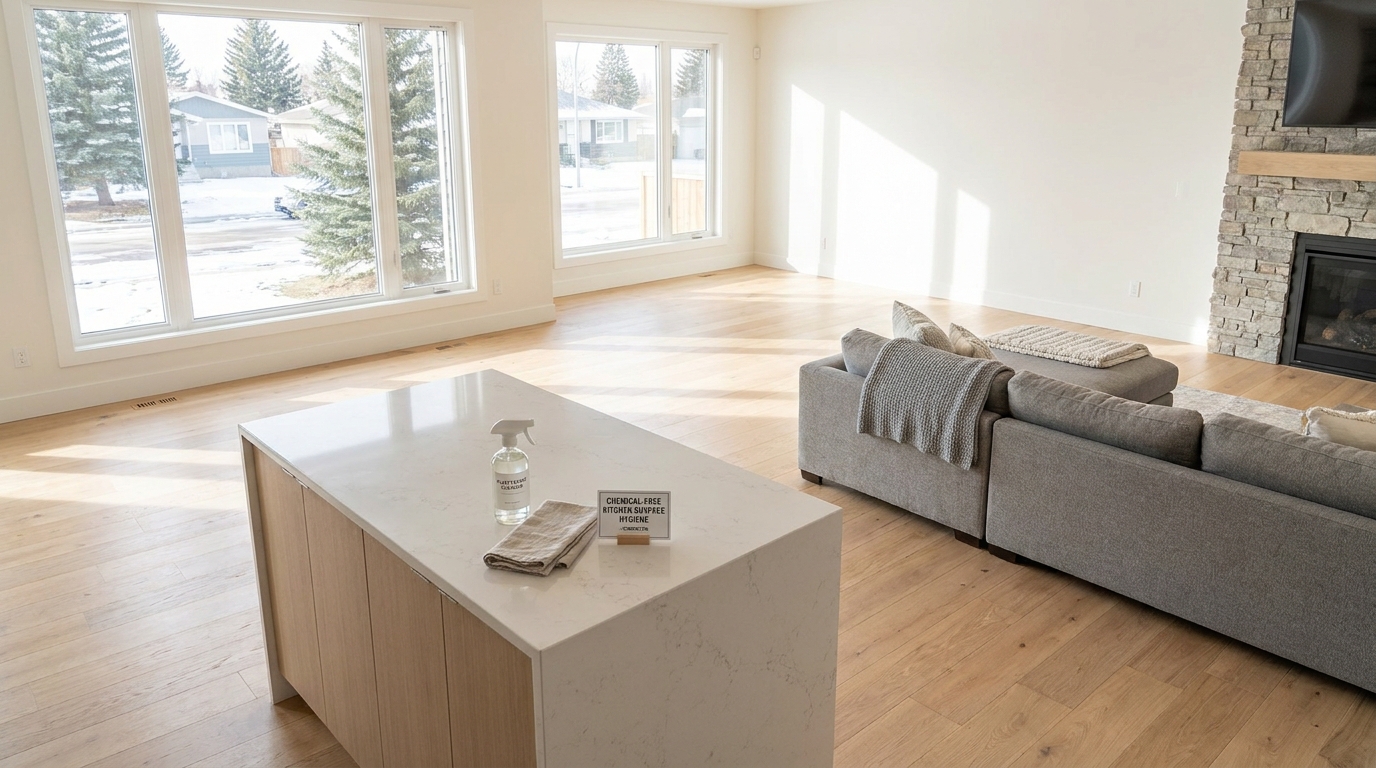
Struggling to keep your kitchen sparkling without relying on harsh, pungent chemicals that leave you worrying about what your family is ingesting? Every time you spray a conventional all-purpose cleaner on the same countertops where you chop vegetables, prepare school lunches, and set down your morning coffee, you run the very real risk of transferring synthetic toxins directly into your meals, turning a space of nourishment into a source of daily anxiety. The safest, most effective solution is adopting proper chemical free kitchen surface hygiene edmonton style—leveraging the simple, scientifically proven power of warm water, high-quality microfiber, and minimal plant-based dish soap to effortlessly lift grime and bacteria while keeping your home environment completely pristine, family-safe, and truly healthy.
Key Takeaways:
- Countertops and Floors: Safe, effective daily cleaning requires nothing more than one single drop of Dawn dish soap mixed with warm water to lift grease and trap bacteria without leaving toxic residues.
- Cupboards and Walls: Protect your delicate cabinetry, millwork, and painted vertical surfaces by using exclusively plain warm water and a well-wrung, damp microfiber cloth to prevent sticky chemical buildup.
- Strict Chemical Limits: Reserve bleach strictly for toilet bowls and use vinegar only to tackle hard water mineral scale, ensuring your food-prep zones remain entirely free of harsh, surface-damaging acids and toxic fumes.
How Can I Ensure Safe Food-Prep Surface Hygiene in Edmonton Without Harsh Toxins?
When you are preparing meals for your family, the absolute last thing you want to serve alongside your fresh local produce is a side of invisible chemical residue. Maintaining strict chemical free kitchen surface hygiene edmonton standards is vital for the long-term health and wellness of your household. Many homeowners fall into the trap of believing that only industrial-grade, highly fragranced sprays can adequately sanitize a countertop after preparing raw meat, dealing with sticky spills, or unpacking groceries. However, these aggressive retail products often leave behind films that can easily transfer to the food you eat, while simultaneously degrading the sealant on high-end stone countertops.
The secret to professional-level, food-safe hygiene is shockingly simple, rooted in the science of mechanical cleaning: one drop of Dawn dish soap combined with warm water. This highly effective, minimalist solution acts as a powerful surfactant. Instead of merely coating bacteria in chemicals and leaving them on the counter, the soap molecules actively break down grease and surround the dirt, pathogens, and food particles. By suspending these contaminants in the water, they can be easily and entirely wiped away with a clean cloth. This method leaves your kitchen counters completely bare, beautifully clean, and entirely safe for your next meal prep session. It is the exact, health-first approach trusted by experts providing reliable house cleaning in Edmonton, where the core focus is always on protecting the homeowner’s respiratory health and preserving the integrity of their expensive countertop materials.
Furthermore, it is critical to remember what does not belong on your food preparation surfaces. Never use bleach for general surface cleaning anywhere in your kitchen. Bleach is a highly caustic, hazardous substance that is strictly reserved for toilet bowls. Bringing it into the kitchen introduces severe respiratory irritants, damages natural stone and wood, and carries an unnecessarily high risk of toxic cross-contamination. By sticking strictly to the one-drop dish soap rule, you ensure your Edmonton kitchen remains a sanctuary of health.
Why is Hot Water and Plant-Based Soap Cleaning Best for Edmonton Kitchens?
Edmonton’s unique climate and local municipal water supply present specific challenges for home maintenance, particularly in the kitchen where cooking grease and environmental dust readily combine. During our long, famously dry Albertan winters, airborne dust settles rapidly across the home, sticking tenaciously to the microscopic grease splatters generated from daily stovetop cooking. While the immediate instinct might be to reach for a heavy-duty chemical degreaser, the combination of hot water and a high-quality plant-based soap is vastly superior for both your family’s health and the longevity of your home’s delicate finishes.
When addressing your vertical surfaces—such as kitchen cupboards, pantry doors, and painted walls—the cleaning rules become even more minimalist. For these specific areas, you should use absolutely no soap whatsoever. The absolute best method is to use plain warm water and a premium, well-wrung, damp microfiber cloth. Microfiber technology contains thousands of microscopic, wedge-shaped fibers that mechanically scoop up dirt, grease, and ambient bacteria without the need for any chemical intervention. Using sprays or even mild soaps on your cabinetry will eventually lead to a dull, sticky soap-scum buildup that actually attracts and holds onto more dust over time. A simple, gentle wipe-down with a water-dampened microfiber cloth protects the wood varnish, lacquer, and paint, keeping your kitchen looking factory-new without introducing airborne volatile organic compounds (VOCs).
We must also firmly address the common internet misconception regarding vinegar. Many DIY cleaning blogs promote vinegar as a universal “natural” cleaner. However, vinegar is a highly active acid. Using it as a daily cleaner on natural stone countertops, tile grout, or hardwood floors will cause irreversible etching, dulling of the finish, and structural degradation. In our professional methodology, vinegar has one specific, isolated use: dissolving hard water mineral scale. Because Edmonton has notoriously hard water, stubborn white mineral deposits can quickly build up around your kitchen sink faucet and dishwasher drain. In this isolated scenario, vinegar is an excellent, non-toxic remedy. For everything else, leave it safely stored in the pantry. For more insights on how top-tier professionals handle our regional cleaning quirks safely and effectively, you can explore our comprehensive guide on house cleaning in Edmonton.
What is the Best Way to Sanitize High-Touch Handles and Switches Naturally?
Think about the physical journey of a pathogen or virus through your kitchen on a busy weekday evening. You come home from the grocery store, put away the raw chicken, open the fridge door, pull open the garbage cabinet, and flick on the overhead light switch. These high-touch areas are the primary vectors for cross-contamination, especially during Edmonton’s peak cold and flu seasons. Because these specific touchpoints are frequently handled by every single member of the family, relying on stringent chemical free kitchen surface hygiene edmonton techniques is crucial to avoid constant, daily skin exposure to synthetic, drying disinfectants.
To safely manage and sanitize these areas, revisit the unparalleled power of plain warm water and a damp microfiber cloth for everyday maintenance on cupboard knobs, drawer pulls, and light switch plates. If there is visible, sticky food residue on a handle (such as dried maple syrup, baking flour, or cooking oil), you can utilize the exact same mixture you use for your counters and floors: just one single drop of Dawn dish soap heavily diluted in warm water. Dip just a small corner of your cloth into this solution, wring it out until it is barely damp to avoid dripping any water into electrical switch housings, and thoroughly wipe the hardware. The intense mechanical scrubbing action of the microfiber, combined with the gentle grease-cutting power of the minimal soap, is more than enough to remove the bio-load and dirt without leaving a lingering, artificial chemical odor on your family’s hands.
How Should You Handle Daily Cutting Board Care Without Exposing Your Family to Chemicals?
Cutting boards are the literal, physical intersection between your raw cooking ingredients and the finished meals you serve, making them the most critical surfaces in your entire kitchen to keep toxin-free. Whether you prefer the aesthetics of thick wooden butcher blocks or the convenience of color-coded plastic prep boards, maintaining them properly without relying on harsh chemicals requires consistency and the correct mechanical technique.
For standard daily cleaning, hot water and physical friction are your greatest allies. Immediately after chopping fresh vegetables, slicing bread, or dicing fruit, wash the board using hot tap water and a minimal amount of dish soap. Use a stiff-bristled kitchen brush to scrub the surface mechanically; this rigorous physical scrubbing is exactly what dislodges microscopic food particles and ambient bacteria from the tiny grooves created by your chef’s knives. Never soak wooden cutting boards in a sink full of water, as this will cause the natural wood fibers to warp, splinter, and eventually harbor deep-seated bacteria in the expanding cracks.
If you are dealing with a cutting board that was just used for raw meat, poultry, or fish, the protocol remains strictly chemical-free in terms of harsh toxins. You absolutely do not need to reach for bleach to achieve food-safe sanitation. Wash the board thoroughly with hot water and a drop of dish soap, ensuring you work up a rich lather to trap all lipid and protein molecules. Next, rinse the board completely with scalding hot water. The most crucial step is to allow the board to air-dry entirely by standing it upright on your counter; bacteria require moisture to multiply and cannot survive on a completely dry, clean surface. Periodically treating wooden boards with food-grade mineral oil will keep them from cracking, further preventing bacterial growth. This highly logical, deeply safe approach to home kitchen maintenance is exactly why so many busy families trust professional standards over aggressive retail chemicals. If you are looking to have your entire kitchen meticulously reset to a hygienic, healthy baseline by vetted experts who follow these exact health-first protocols, reviewing the best house cleaning services in Edmonton for 2026 can help you easily find a premium service that perfectly aligns with your family’s chemical-free values.
Frequently Asked Questions: Chemical-Free Kitchen Surface Hygiene in Edmonton
Can I use vinegar as a daily cleaner for my kitchen countertops and hardwood floors?
No, vinegar should never be used as a daily general cleaner. Because it is highly acidic, regular use will permanently etch natural stone countertops, break down tile grout, and ruin the protective finish on hardwood floors. Vinegar must be used exclusively for treating hard water mineral scale, such as the white calcium buildup around your sink faucet.
Is bleach required to safely sanitize my kitchen surfaces after preparing raw meat?
Absolutely not. Bleach is a highly caustic, hazardous chemical that is strictly reserved for cleaning toilet bowls. To safely clean food-prep surfaces after handling raw meat, use a simple solution of one drop of Dawn dish soap and warm water, combined with the mechanical scrubbing power of a clean cloth, to safely lift, trap, and wash away bacteria without leaving toxic residue.
What is the safest, most effective way to clean kitchen cupboards and painted walls?
The safest and most effective method for cleaning delicate kitchen cupboards, millwork, and painted walls is using plain warm water and a well-wrung, damp microfiber cloth. You should completely avoid using soaps or chemical sprays on these vertical surfaces, as they will inevitably leave a sticky, dulling residue that degrades the finish and actively attracts dust over time.