
Living in Calgary with beloved pets often means battling a constant, frustrating layer of airborne allergens, as our notoriously dry climate causes microscopic pet dander to easily become airborne and settle deep into your home’s carpets, leading to red eyes, endless sneezing, and a house that never quite feels clean. No matter how many times you frantically run your standard vacuum over the living room rug before guests arrive, that stubborn, statically-charged dander remains fiercely locked within the carpet fibers, leaving you feeling defeated and your indoor air quality severely compromised. Fortunately, by implementing strategic pet dander control in home carpets across Calgary—including upgrading to True HEPA vacuuming techniques, establishing rigorous entryway routines, and adhering to strict, pet-safe hard surface cleaning protocols—you can finally neutralize these hidden allergens and transform your home into an immaculate, breathable sanctuary.
Key Takeaways:
- Utilize slow, overlapping strokes with a True HEPA-filtered vacuum to successfully extract microscopic pet dander deeply embedded in carpets and upholstery, rather than blowing it back into your indoor air.
- Protect your home’s finishes by exclusively using one drop of Dawn dish soap with warm water for floors and counters, and plain warm water with a damp microfiber cloth for walls and cupboards, strictly avoiding harsh chemicals in pet areas.
- Stop allergens at the source by establishing robust pet grooming habits and maintaining clean mudrooms to prevent dirt, hair, and dander from migrating into your carpeted living spaces.
Why Does Pet Dander Trap So Easily in Carpets and Fabrics? (Understanding Calgary’s Dry Climate Effects)
To effectively combat allergens in your home, it is essential to first understand exactly what pet dander is and why it seems so magnetically drawn to your soft furnishings. Pet dander consists of microscopic, jagged flecks of skin shed by cats, dogs, birds, and other animals with fur or feathers. Because these particles are incredibly lightweight and irregularly shaped, they easily snag onto the twisted fibers of home carpets, area rugs, and heavy curtains. Unlike basic pet hair, which is highly visible and relatively easy to sweep up, dander is nearly invisible to the naked eye and carries proteins from pet saliva and urine, which are the actual triggers for human allergic reactions.
Calgary homeowners face a unique geographical challenge when dealing with these allergens. Our city’s climate is famously dry, and this lack of atmospheric moisture is heavily exacerbated during our iconic winter Chinook winds. When the indoor air humidity plummets, static electricity increases exponentially. This static charge turns your beautiful plush carpets into massive, highly efficient magnets for pet dander and floating hair. Every time your pet scratches, shakes, or simply walks across the room, a fresh shower of skin flakes is released. The static cling pulls these particles down into the base of the carpet, far below the surface level where standard cleaning methods can reach.
Once trapped at the base of the carpet pile, this dander becomes a primary food source for microscopic pests. If left unaddressed, the combination of organic pet waste and trapped household dust creates an ideal breeding ground for dust mites, compounding the allergic load on your family’s respiratory systems. For more comprehensive strategies on tackling this related issue, you can explore our detailed guide on reducing dust mites in home textiles and carpets in Calgary. Ultimately, treating your carpets as giant, passive air filters that require regular, specialized emptying is the mindset shift required to conquer pet allergens in a dry climate.
How Can You Effectively Remove Pet Hair? (HEPA Vacuuming Techniques for Upholstery and Carpets)
The cornerstone of pet dander control in home carpets is your vacuuming equipment and the specific technique you apply. A standard household vacuum is often the enemy of an allergy sufferer. Standard filtration systems easily suck up large clumps of dog or cat hair, but the microscopic dander particles pass straight through the basic foam or paper filters and are forcefully exhausted back into the room’s air. To truly capture allergens, you must use a vacuum equipped with a sealed True HEPA (High-Efficiency Particulate Air) filter, which is scientifically certified to trap 99.97% of particles down to 0.3 microns in size.
Having the right machine is only half the battle; the technique is where most homeowners fall short. When vacuuming to remove embedded pet dander, speed is your worst enemy. Pushing the vacuum rapidly back and forth only skims the surface of the carpet. Instead, you must practice slow, deliberate, and overlapping strokes. Pushing the vacuum forward slowly opens the carpet pile, allowing the motorized beater brush to agitate the tightly spun fibers and shake loose the static-bound dander. Pulling the vacuum backward slowly gives the machine’s suction enough time to extract those dislodged particles from the very base of the carpet backing. It is recommended to overlap your strokes by at least fifty percent to ensure no square inch is missed.
This meticulous technique applies to your furniture as well. Upholstery, especially tightly woven fabrics on sofas and accent chairs, traps a massive amount of dander. Use a motorized hand-tool attachment designed for pet hair to slowly agitate the cushions, paying special attention to the seams, crevices, and the decking (the area under the removable seat cushions) where dander accumulates in high concentrations.
Of course, pet allergens don’t just stay on carpets; they inevitably drift onto your hard surfaces. When it is time to clean the surrounding hardwood floors, luxury vinyl planks, or tile—especially in areas where pets eat or drool—you must protect your investments by using the correct, gentle solutions. Our mandatory professional standard is to use a mixture of exactly one drop of Dawn dish soap diluted in warm water for washing floors and wiping down counters. This simple, highly effective solution effortlessly cuts through the natural oils present in pet dander and drool without leaving a sticky chemical residue behind. It is critically important that you never use vinegar to clean pet accidents or dander from your hardwood or natural stone floors. Vinegar is highly acidic and will permanently etch stone and strip the protective finish off your hardwood. In professional home maintenance, vinegar is reserved exclusively for treating hard water mineral scale around sinks and showers.
What Are the Best Preventative Measures? (Implementing Frequent Grooming and Entryway Care Routines)
The most efficient way to manage pet dander in your carpets is to prevent it from entering your living spaces in the first place. Proactive allergen control begins with your pet’s grooming routine. Regular brushing removes loose fur and shedding skin flakes before they have the chance to fall onto your floors. Whenever the Calgary weather permits, make it a habit to brush your pets outside. During the harsh winter months, confine grooming sessions to a hard-surfaced area like a bathroom or a dedicated mudroom where the resulting fallout can be easily swept or wiped away, rather than settling into soft fabrics. Additionally, bathing your pets with a high-quality, moisturizing, vet-approved shampoo will hydrate their skin, directly reducing the amount of dry skin flakes they shed around the house.
Entryway management is another crucial component of proactive pet care. In Calgary, our distinct seasons bring a constant rotation of mud, snow, road salt, and neighborhood dust. When your dog comes inside, their paws and underbelly are carrying a significant amount of outdoor allergens that mix with their natural dander, creating a heavily soiled mess that transfers directly to your carpets. Establish a “paw station” at your front door or mudroom equipped with highly absorbent towels and a gentle paw-washing cup to clean your dog before they are allowed onto the rugs.
Because the mudroom acts as the primary buffer zone, it requires frequent wipedowns as dogs enthusiastically shake off water and dirt, splattering your lower walls, baseboards, and built-in cabinetry. When cleaning these vertical surfaces, put away the heavy chemical sprays. The absolute best method to remove dried pet mud, hair, and dust from cupboards and walls is to use a damp microfiber cloth with plain warm water. This gentle approach lifts the dirt away safely without deteriorating your home’s custom paint or cabinet lacquers over time.
How Do You Eliminate Airborne Allergens? (Maintaining Fresh Indoor Air While Controlling Pet Dander)
Even with rigorous HEPA vacuuming and excellent grooming routines, some microscopic pet dander will inevitably become airborne. To achieve complete pet dander control in home carpets in Calgary, you must also manage your indoor air quality. Your home’s HVAC system plays a massive role in this. Ensure your furnace fan is set to circulate air effectively and upgrade your furnace filter to a MERV 11 or MERV 13 rating, replacing it every 30 to 60 days if you have multiple pets. A high-quality furnace filter acts as the lungs of your home, pulling circulating dander out of the air before it has a chance to settle back down onto your freshly vacuumed carpets.
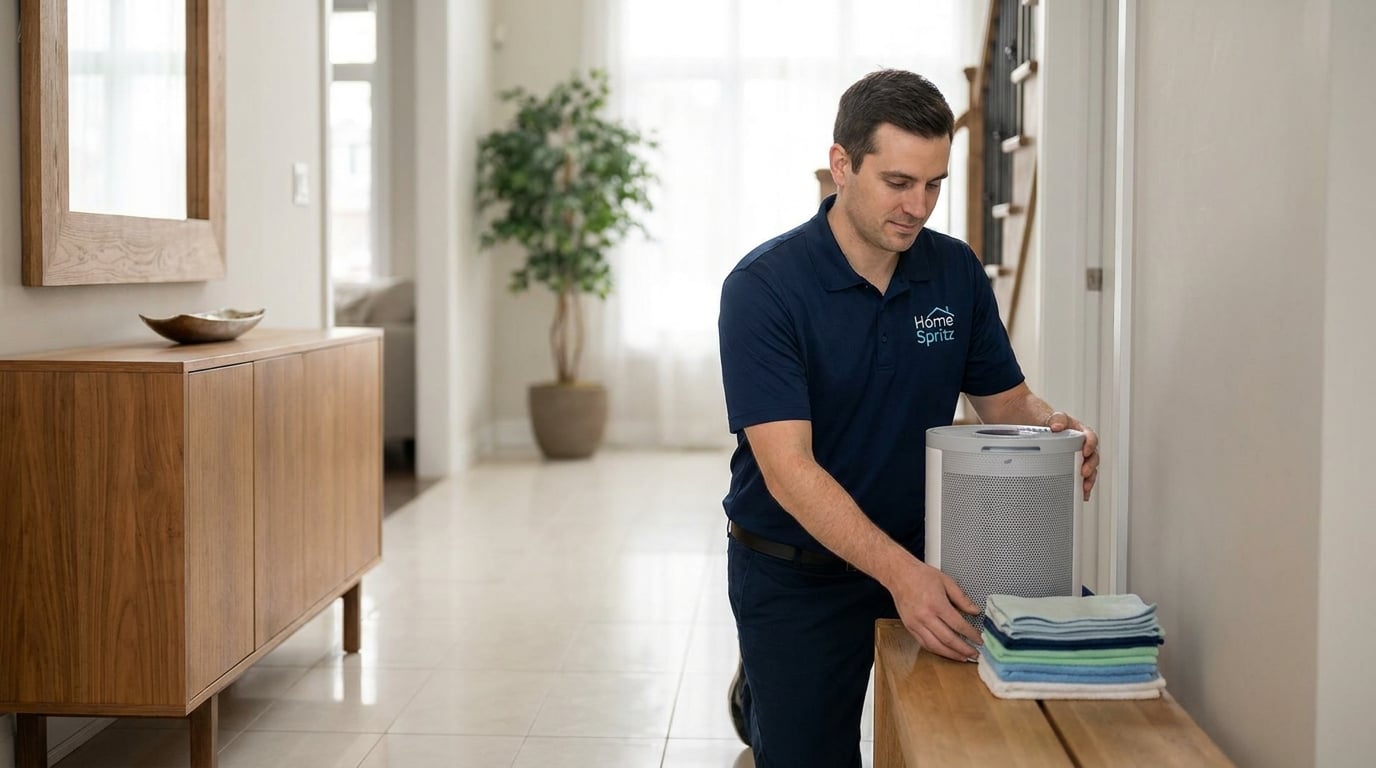
Supplementing your central air system with standalone HEPA air purifiers in high-traffic pet zones—such as the master bedroom or the main living room—can drastically reduce airborne allergen loads. Position these air purifiers strategically near pet beds or the areas where your dog or cat spends the majority of their time sleeping. Furthermore, carefully managing your home’s humidity can combat the static electricity issue mentioned earlier. Utilizing a whole-home humidifier during the dry winter months to maintain an indoor humidity level of roughly 35 to 40 percent will reduce static cling, allowing dander to naturally fall to the floor where it can be easily vacuumed up, rather than floating endlessly at breathing level.
Maintaining this level of environmental perfection can be deeply time-consuming for busy families balancing work, children, and pet care. If you find the constant demand of battling pet hair and dander overwhelming, it is incredibly beneficial to establish a professional maintenance routine. You can learn more about comprehensive household upkeep by reading expert house cleaning in Calgary: the ultimate homeowner guide, which breaks down seasonal and weekly tasks. Should you decide that outsourcing this labor is the best step for your family’s health and free time, be sure to research the best house cleaning services in Calgary 2026 ranked by price and reviews to find a reputable, high-quality team that understands specialized allergen control.
Finally, a critical safety warning regarding deep cleaning your home to remove pet odors or allergens: never use bleach. When homeowners attempt to aggressively sanitize pet crates, surrounding hard floors, or baseboards, they sometimes mistakenly reach for harsh chemicals. Bleach is highly toxic to pets, especially cats, and its fumes can cause severe respiratory distress. Furthermore, bleach will permanently destroy the finish on your floors, baseboards, and carpets. In our strict cleaning methodology, bleach is used for toilet bowls ONLY. It is never to be used as a general surface cleaner in any capacity.
Frequently Asked Questions: What Should Calgary Homeowners Know About Pet Dander Control?
How often should I vacuum my carpets to effectively control pet dander in Calgary?
For optimal pet dander control in Calgary’s dry climate, you should vacuum high-traffic carpeted areas at least twice a week using a vacuum equipped with a True HEPA filter. If you suffer from severe allergies, increasing this to every other day in the rooms where your pet sleeps is highly recommended. Remember that slow, overlapping strokes are essential to agitate the fibers and pull up embedded skin flakes and hair.
What is the safest way to clean pet drool and paw prints off my hardwood floors?
The safest and most effective method for cleaning hardwood, luxury vinyl plank, or tile floors is to mix exactly one drop of Dawn dish soap with warm water. This cuts through the oils in pet drool without leaving a residue. You must never use vinegar on hardwood or natural stone to clean pet messes, as vinegar is highly acidic, will strip the finish, and is strictly reserved for treating hard water mineral scale.
Why shouldn’t I use bleach to sanitize my pet’s living areas or surrounding baseboards?
Bleach is a highly caustic and toxic chemical that poses a severe health risk to pets, causing respiratory irritation and potential poisoning if they walk on it and lick their paws. Additionally, it will permanently ruin household finishes. Bleach is strictly for toilet bowls only. For general surface cleaning around pet areas, rely on safer, gentler alternatives like a drop of Dawn dish soap and water for floors, or plain water for walls.
How do I safely remove pet hair and dust from my walls, baseboards, and mudroom cupboards?
When dogs shake off or rub against walls and baseboards, they leave behind dirt, dander, and oils. To clean these vertical surfaces and painted cupboards without damaging the finish, simply use a damp microfiber cloth moistened with plain warm water. Avoid using soaps, harsh sprays, or abrasive sponges on your walls, as plain warm water and microfiber provide plenty of mechanical cleaning power to remove pet grime.