
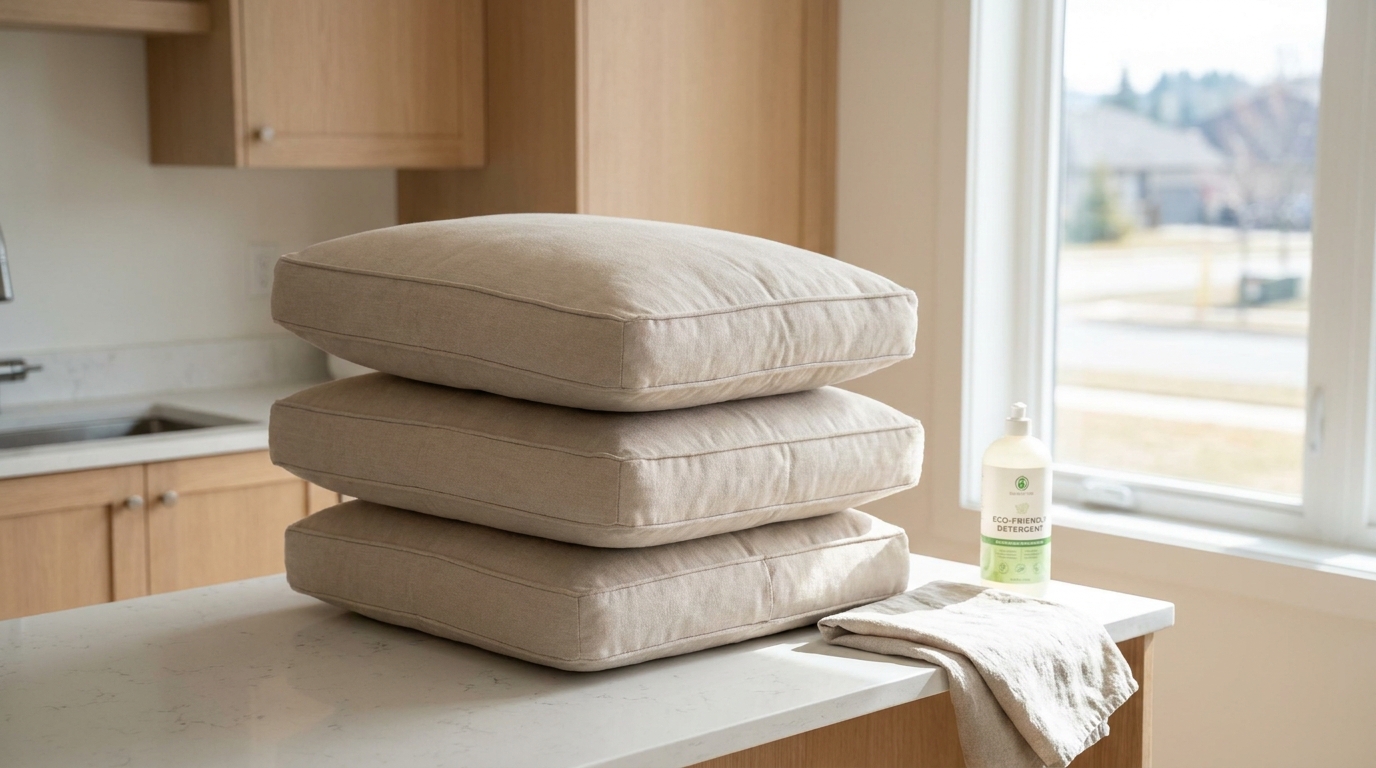
Calgary’s uniquely dry climate and fluctuating weather mean your beautiful fabric sofa inevitably collects abrasive dust, pet dander, and mystery spills, leaving your once-cozy cushions looking dull and dingy. Ignoring these everyday stains doesn’t just make your living room look unkempt; it actually allows those sharp dirt particles to grind deeply into the fabric fibers, permanently degrading your expensive upholstery while trapping microscopic allergens that compromise your family’s indoor air quality. Fortunately, mastering the art of washing fabric sofa cushions safely in Calgary is entirely achievable, and by relying on professional, gentle cleaning methods, you can perfectly restore your furniture’s fresh, inviting feel without any risk of permanent shrinkage or irreversible water damage.
- Decode your sofa’s specific manufacturer care tags to ensure you are selecting the safest, most effective cleaning method for your exact fabric blend.
- Master the gentle spot-cleaning technique using just a single drop of mild dish soap and warm water, avoiding acidic or harsh chemicals that destroy woven fibers.
- Implement strategic air-drying methods that leverage Calgary’s dry climate to prevent mildew, mold, and dreaded fabric shrinkage.
How Can I Extend the Life of Upholstered Furniture in Calgary? (Pro Tips for Sofa Longevity)
Maintaining a fresh, comfortable living space starts with proactive care. Calgary homeowners know that our dry, dusty environment can wreak havoc on indoor fabrics over time. Airborne dust settles easily into the intricate weave of your couch, and every time you sit down, that dust acts like microscopic sandpaper, slowly breaking down the organic and synthetic threads. The secret to extending the life of upholstered furniture isn’t just about knowing how to wash it when it becomes visibly soiled; it is fundamentally about consistent, preventative maintenance.
First and foremost, regular vacuuming is your absolute best defense against premature wear. You should be using a dedicated upholstery brush attachment to vacuum your sofa at least once a week. This simple, five-minute habit removes the dry, loose soil before it has a chance to embed itself deeply into the foam cushions. Pay special attention to the deep crevices and the stitched seams, as these are the notorious hiding spots for trapped crumbs, pet hair, and abrasive debris. Additionally, flipping and rotating your cushions regularly ensures even wear and tear, preventing one side from looking deflated. If your sofa is positioned near a bright, south-facing window, consider drawing the blinds during peak afternoon sunlight to prevent intense UV rays from fading the vibrant colors of your fabric. For those who want to ensure their entire home is meticulously maintained from top to bottom, partnering with professionals for expert house cleaning in Calgary provides a holistic approach to a dust-free, pristine living environment that naturally extends the lifespan of all your major home investments.
What Do Those Fabric Care Labels Actually Mean? (Decoding W, S, WS, and X Tags)
Before you even think about applying moisture or a cleaning solution to your beloved couch, you must consult the manufacturer’s care tag. This is the absolute golden rule of upholstery maintenance and cannot be skipped. Washing fabric sofa cushions in Calgary without first checking this crucial tag is a recipe for disaster, potentially leading to immediate water stains, irreversible color bleeding, or completely ruined fabric texture. The care label is usually tucked underneath the seat cushions or stapled firmly to the bottom structural framework of the sofa.
These labels feature specific, standardized letter codes that dictate exactly what kind of cleaning agents are safe to use on your specific piece of furniture:
- W (Water-Based Cleaners): This is the easiest fabric to maintain at home. It means the upholstery can safely withstand gentle, water-based cleaning solutions and light moisture.
- S (Solvent-Based Cleaners): This fabric must be dry-cleaned using specialized, water-free solvents. Applying any water at all to an “S” fabric will leave a permanent, dark ring or cause the delicate fabric to pucker and shrink drastically.
- WS (Water or Solvent): You have a bit more flexibility here. You can use either a mild water-based approach or a professional dry-cleaning solvent, though testing an inconspicuous spot first is highly recommended to ensure colorfastness.
- X (Vacuum Only): Never use water or solvent cleaners on this material. It should only be gently brushed or vacuumed. If it becomes heavily stained, you must consult a professional upholstery cleaning service.
Understanding these essential codes is a fundamental part of responsible, eco-friendly house cleaning in Calgary, ensuring you only use appropriate, non-destructive solutions on your home’s most delicate and valuable surfaces.
How Should I Spot Clean Fabric Couch Cushions Safely? (Using Mild Soap for Tough Stains)
If your care tag displays a friendly “W” or “WS,” you are cleared to tackle those inevitable coffee drips, muddy paw prints, and stray food smudges with a water-based approach. The most critical thing to remember when treating upholstery is that less is always more. Drenching the cushion will simply push the stain deeper into the internal foam padding, creating a dark, damp breeding ground for bacteria and mold.
At Home Spritz, we advocate for the gentlest possible approach to all household surfaces. Our strict, non-toxic cleaning philosophy dictates that harsh chemicals have absolutely no place in everyday surface cleaning. For instance, bleach is highly corrosive and should exclusively be reserved for disinfecting ceramic toilet bowls. Similarly, while vinegar is a popular DIY cleaner, it is strictly meant for tackling hard water mineral scale on appropriate bathroom fixtures. You should never use vinegar on hardwood floors, natural stone, or your delicate fabric sofa cushions! Acidic vinegar can easily weaken organic fabric threads, and bleach will instantly strip the dye right out of your couch.
Instead, the best method for spot-cleaning your sofa mirrors our mandatory rule for washing delicate floors and counters: use just one single drop of Dawn dish soap mixed into a bowl of warm water. Dip a clean, white microfiber cloth into this exceptionally mild sudsy solution and wring it out aggressively until it is merely damp, not dripping. Gently blot the stain starting from the outside edge and working inward to prevent the spot from spreading. Do not aggressively scrub or rub the fabric, as this friction causes the woven fibers to pill, fray, and look worn out. Once the stain finally lifts, use a second microfiber cloth dampened with plain warm water (just like the gentle method we use for wiping down cupboards and painted walls) to gently blot away any residual soap suds.
What Are the Best Proper Air-Drying Techniques for Couch Cushions? (Preventing Mold and Shrinkage)
Once you have successfully spot-cleaned or fully washed your cushion covers, the drying process is where many well-intentioned homeowners make a critical, unfixable error. You must never put fabric sofa cushion covers in the clothes dryer. The intense heat of a standard household tumble dryer will almost certainly shrink the fabric, warp the plastic zipper tracks, and ruin the structural integrity of the weave. If the covers shrink even half an inch, you will find it nearly impossible to stuff the thick foam core back inside.
Instead, you must rely entirely on proper air-drying techniques. Fortunately, washing fabric sofa cushions in Calgary comes with a distinct geographical advantage: our naturally arid climate. Low humidity is fantastic for air-drying thick textiles quickly before mildew has a chance to form.
If you have completely removed the covers to wash them (and only if the care tag explicitly permits machine washing on a delicate, cold cycle), put the covers back over the foam inserts while they are still slightly damp. This professional industry trick allows the fabric to stretch and dry perfectly to the exact shape of the cushion, preventing an ill-fitting, baggy appearance later on. Prop the damp cushions up vertically against a clean wall or lean them in a “V” shape on the floor to maximize airflow around all six sides. Turn on your overhead ceiling fans, open a few windows to let the crisp Calgary breeze circulate, or place a portable oscillating fan nearby to drastically expedite the evaporation process. Ensure the cushions are 100% bone-dry to the touch before placing them back onto the main sofa frame. When you invest time into this level of proper care, you uphold the premium standard of cleanliness that the best house cleaning services in Calgary always aim to deliver.
Frequently Asked Questions About Washing Fabric Sofa Cushions in Calgary
Can I put my fabric sofa cushion covers in the washing machine?
You can only put your cushion covers in the washing machine if the manufacturer’s specific care tag explicitly states it is safe to do so (this is often indicated by a standard machine wash symbol alongside a “W” tag). If permitted, always use a gentle, cold-water delicate cycle with a very mild detergent. Be sure to zip the covers fully closed before washing to prevent the raw interior edges from fraying in the machine. Never put them in the hot dryer; always air-dry them to prevent permanent shrinkage.
Is it safe to use vinegar or bleach to clean my couch stains?
Absolutely not. At Home Spritz, we strictly follow safe chemical protocols to protect your home. Bleach is highly corrosive and is exclusively reserved for heavy-duty disinfecting inside toilet bowls; it will instantly ruin the color and melt the synthetic fibers of your couch. Similarly, household vinegar is highly acidic and should only ever be used to safely dissolve hard water mineral scale on specific plumbing fixtures. Vinegar can easily degrade upholstery threads and will leave a lingering, unpleasant salad-dressing odor in your living room. Always stick to a single drop of mild Dawn dish soap mixed with warm water for treating everyday fabric stains.
How often should I be washing my fabric sofa cushions?
For routine maintenance and longevity, you should thoroughly vacuum your fabric sofa cushions weekly to remove abrasive dust, crumbs, and pet hair. Deep cleaning or wet spot treating should only be done on an as-needed basis when visible spills actually occur. If your covers are fully machine washable, washing them once or twice a year is generally more than sufficient to keep them smelling fresh and looking vibrant, without causing unnecessary, premature wear and tear on the delicate fabric weave.