
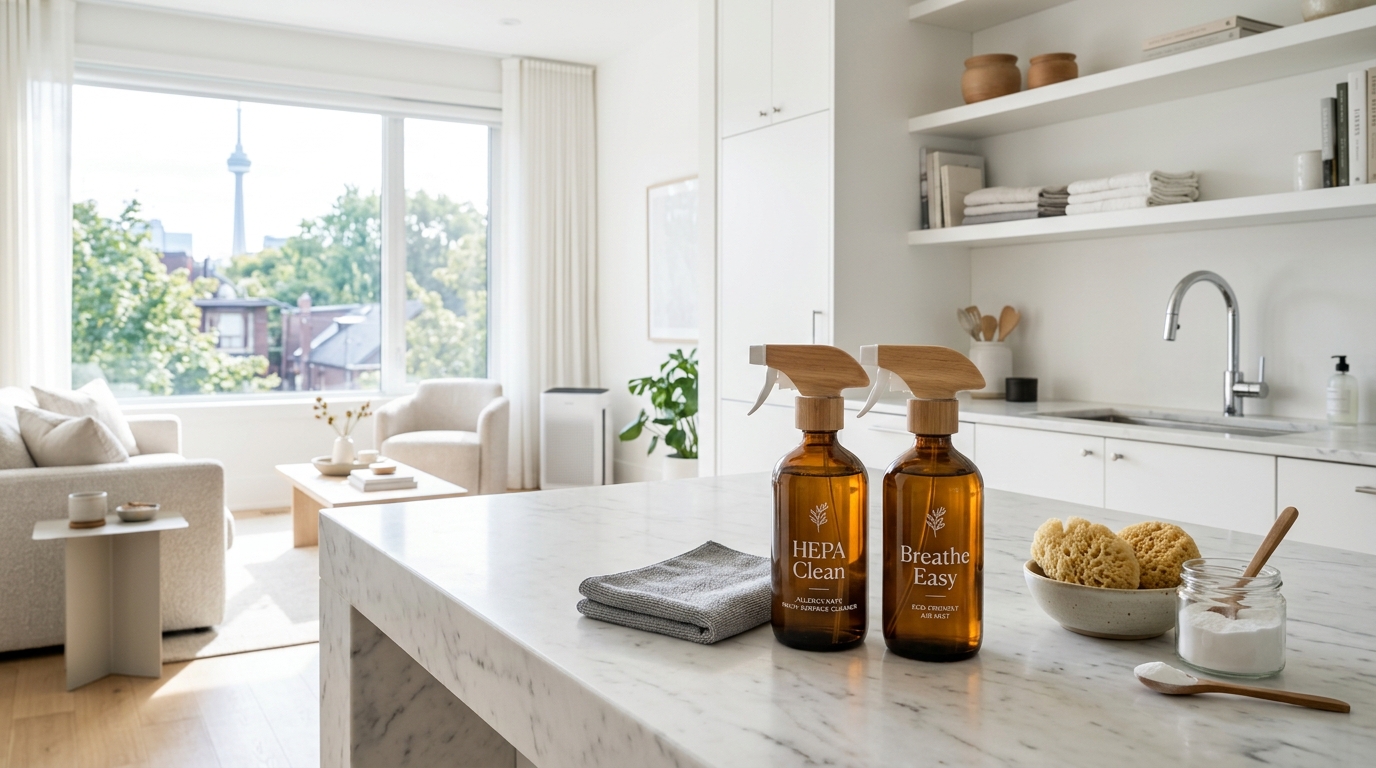
You wake up with a scratchy throat, itchy eyes, and a lingering cough. Despite keeping a tidy home, seasonal changes in Canada bring a wave of indoor allergens, and standard cleaning methods just seem to push the dust around. For the millions of Canadians living with asthma or allergies, your home should be a safe haven, not a trigger zone.
The harsh reality is that our well-insulated, energy-efficient Canadian homes are excellent at trapping warm air during the winter, but they are equally adept at trapping indoor pollutants. From pet dander and dust mites breeding in our cozy carpets to the chemical fumes emitted by conventional cleaning sprays, these microscopic invaders are constantly aggravating your respiratory system. In fact, standard sweeping and traditional feather dusting often make things worse by launching settled particles right back into the air you breathe. When everyday chores leave you wheezing and exhausted, the stress begins to take a massive toll on your family time, weekend relaxation, and overall well-being.
Fortunately, a strategic approach to household maintenance can drastically improve your indoor air quality and bring lasting relief. As your trusted local Canadian cleaning experts, we know exactly what it takes to banish these invisible irritants. By leveraging the right tools, employing meticulous techniques, and using specialized products, you can transform your living space into a truly hypoallergenic sanctuary. And if the workload is too overwhelming, bringing in top-tier professionals like Home Spritz can guarantee a deep, breathe-easy clean without the hassle. Let’s dive into the most effective house cleaning techniques to help allergy and asthma sufferers reclaim their comfort.
Common Indoor Allergens in Canadian Homes
Indoor air quality is a significant concern, especially during our long, freezing winters when windows remain tightly shut for months on end. Understanding exactly what you are up against is the critical first step toward effective mitigation.
According to Asthma Canada, over 4.8 million people across the country live with asthma, and countless others suffer from chronic indoor allergies. Their research consistently highlights that poor indoor air quality is a major, yet highly manageable, trigger for respiratory flare-ups. The most frequent culprits found lingering in our homes include:
- Dust Mites: These microscopic pests thrive in warm, humid environments and feed on human skin flakes. They are heavily concentrated in bedding, upholstered furniture, and carpets.
- Pet Dander: We love our furry companions, but the proteins found in their skin flakes, saliva, and urine can linger in the air for hours before permanently settling into fabrics and crevices.
- Mold Spores: Due to temperature fluctuations and indoor humidity from showers and cooking, mold can easily develop in poorly ventilated bathrooms, basements, and around window sills. Health Canada notes that managing moisture and improving ventilation are critical steps in preventing mold and dust mite proliferation in homes.
- Pollen: During the spring and summer months, pollen easily tracks indoors on shoes, clothing, and pets, embedding itself deep into your entrance mats and floors.
Tackling these allergens requires more than just a quick surface wipe before guests arrive. It requires understanding the science of cleaning—specifically, how to permanently capture, neutralize, and remove microscopic matter rather than simply redistributing it back into your breathing zone.
HEPA Vacuuming and Damp Microfiber Dusting
When you suffer from allergies, the tools you use dictate your success. Traditional straw brooms, dry rags, and synthetic feather dusters are an allergy sufferer’s worst enemy. They simply agitate settled dust, propelling it directly into the air where it can take hours to settle again.
The Power of HEPA Filtration
To genuinely remove allergens from your home, upgrading to a vacuum equipped with a High-Efficiency Particulate Air (HEPA) filter is absolutely non-negotiable. HEPA filters are rigorously tested to trap 99.97% of particles that are 0.3 microns or larger. This means that the dust mites, pet dander, and fine pollen you vacuum up stay locked securely inside the vacuum canister.
- Vacuum slowly and thoroughly: Hasty vacuuming doesn’t give the machine enough time to pull embedded dirt from deep within carpet fibers. Go over high-traffic areas and rugs in slow, overlapping strokes.
- Don’t forget the unseen areas: Vacuum under beds, behind heavy couches, and along baseboards where massive “dust bunnies” naturally congregate.
- Utilize your attachments: Use crevice tools for tight corners, window tracks, and stairs. Upholstery brushes are essential for cleaning curtains, fabric blinds, and soft furnishings.
Damp Microfiber Dusting
Switch out your old cotton rags and dry dusters for high-quality, densely woven microfiber cloths. Microfiber is explicitly engineered to grab and hold onto microscopic particles through a static charge. For the best allergy-fighting results, always use the damp dusting method:
- Lightly mist your microfiber cloth with water or an unscented, plant-based cleaner before wiping down surfaces.
- The dampness acts like a magnet, ensuring the dust is captured directly onto the cloth rather than swept upward into the air.
- Work systematically from top to bottom (starting with ceiling fans and high bookshelves, working down to tabletops, and finally baseboards) so you aren’t accidentally double-cleaning spaces where dust has fallen.
At Home Spritz, our professional cleaners are meticulously trained in these advanced, health-conscious techniques. We ensure every surface is wiped clean with damp microfiber and all floors are comprehensively HEPA-vacuumed, providing our clients with a superior, premier standard of clean that helps families breathe much easier. In fact, many of our busy clients tell us that taking the burden of detailed deep cleaning off their shoulders has been utterly life-changing—some even joke that having professional house cleaning saved my marriage by completely removing weekend chore stress and arguments!
Bedding and Soft Surface Care
Your bedroom should be your ultimate sanctuary and place of rest, but unfortunately, it is often the most allergen-dense room in the house. Since we spend roughly a third of our lives in bed, managing soft surfaces is crucial for waking up symptom-free.
- Wash bedding weekly in hot water: Sheets, pillowcases, and duvet covers should be washed weekly at a minimum temperature of 54°C (130°F) to effectively kill dust mites and flush away their waste.
- Invest in protective encasements: Use certified allergen-proof, tightly woven zippered covers on your mattresses, box springs, and pillows to create an impenetrable barrier between you and the mites.
- Minimize decorative fabrics: While decorative throw pillows, fuzzy rugs, and heavy curtains look beautiful, they are notorious dust traps. Consider swapping heavy drapes for easily washable curtains or wipeable, hard-surface blinds.
- Launder plush toys: If you have children with asthma or allergies, ensure their favorite stuffed animals are machine washable. Alternatively, place them in a sealed plastic bag in the freezer overnight once a week to neutralize dust mites.
Hypoallergenic Eco-Friendly Products
Cleaning to reduce asthma triggers shouldn’t involve introducing new chemical irritants into your home’s air supply. Unfortunately, many conventional cleaning sprays, aerosol polishes, floor waxes, and synthetic air fresheners are loaded with Volatile Organic Compounds (VOCs). When inhaled, these VOCs off-gas and provoke severe respiratory distress, heavily mimicking the very allergy symptoms you are trying to prevent.
Asthma Canada specifically identifies strong chemical fumes, artificial fragrances, harsh bleach, and heavily scented laundry detergents as significant indoor asthma triggers. To aggressively protect your home’s air quality, it is essential to pivot toward unscented, non-toxic alternatives.
Here is how you can make a safe, effective switch in your cleaning caddy:
- Choose true fragrance-free: “Unscented” and “fragrance-free” are not always the same thing. Look for products specifically labeled as fragrance-free, as they contain no chemical masking scents designed to cover up the smell of the raw ingredients.
- Leverage natural cleaners: Simple, natural ingredients like white vinegar, baking soda, and a dash of mild, unscented dish soap can tackle the vast majority of household grease and grime without off-gassing harmful chemicals into your living spaces.
- Read the labels carefully: Avoid products containing ammonia, sodium hypochlorite (bleach), and phthalates, all of which are widely documented respiratory irritants.
If you are looking for specific product recommendations and safe practices, check out our comprehensive guide to eco-friendly cleaning.
At Home Spritz, we view the health of your home environment as our highest priority. We pride ourselves on offering fully customized cleaning plans that seamlessly integrate hypoallergenic and eco-friendly products upon request. We firmly believe that a spotless home should never compromise your family’s respiratory health. Our carefully vetted, top-tier cleaners bring not only the right equipment but a deep, empathetic understanding of how to protect sensitive households across Canada. We provide a hassle-free, premium experience tailored precisely to your family’s health requirements.
FAQ
How often should I vacuum if I have severe allergies?
If you or a family member suffer from severe indoor allergies or asthma, you should aim to thoroughly vacuum high-traffic areas, rugs, and carpets at least twice a week. Always ensure you are using a vacuum equipped with a clean HEPA filter. Hardwood floors, laminates, and tile should be swept or vacuumed and then damp-mopped with a similar frequency to prevent pet dander and dust from accumulating.
Can changing my HVAC filters really make a difference?
Absolutely. Your home’s heating and cooling system circulates air continuously throughout the day. Upgrading to a high-efficiency furnace filter (look for a MERV rating of 11 to 13) and replacing it every two to three months will drastically reduce the ambient amount of airborne dust, pet dander, and fine pollen circulating through your vents.
Is it better to dust or vacuum first when cleaning?
Always dust first! When you dust, even when utilizing the highly effective damp microfiber cloth method, some microscopic particles will inevitably fall to the floor. By dusting from the highest points (like ceiling fans and crown molding) down to the lowest points, and saving the HEPA vacuuming for the very last step, you ensure that any fallen allergens are completely and permanently removed from the room.
Are professional cleaning services safe for asthma sufferers?
Yes, provided you hire a reputable, detail-oriented service that truly understands allergy management. Home Spritz excels at matching you with experienced, premium Canadian cleaning professionals who can utilize specialized HEPA vacuums and scent-free, non-toxic products. This ensures your home is cleaned thoroughly and meticulously without triggering asthma or allergies. Because our platform allows direct communication with your cleaner, you can easily establish your specific triggers and product preferences beforehand for total peace of mind.