
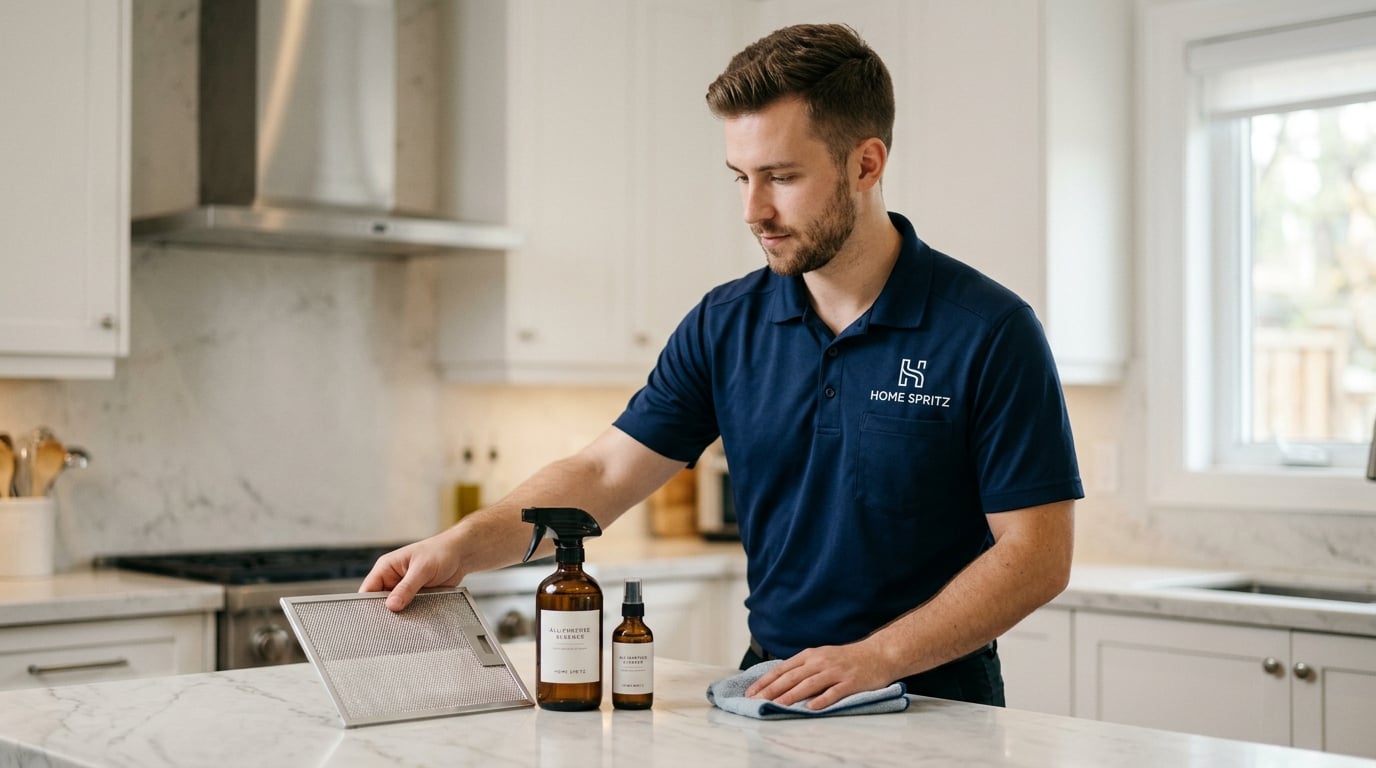
You are cooking up a Friday night feast for your family, but instead of simply enjoying the delicious aromas, you notice smoke lingering heavily in the kitchen. You look up and spot a sticky, yellowish film coating the underside of your range hood. Your exhaust fan sounds like it is working overtime, yet your kitchen still smells like yesterday’s pan-fried salmon, and a faint, greasy haze is beginning to settle over your countertops and living area.
If you choose to ignore that creeping buildup, the trapped residue does not just sit there peacefully. Over time, heavy, solidified grease can drip directly back down onto your clean stovetop—or worse, into the food you are actively preparing. More importantly, a severely clogged range hood is a recognized fire hazard that completely sabotages your home’s indoor air quality. When those aluminum mesh filters are blocked, your exhaust system loses its ability to pull harmful cooking particulates, smoke, and excess moisture out of your living space.
Fortunately, degreasing your range hood mesh filters is a highly rewarding, surprisingly easy chore that requires minimal active scrubbing. With just a few basic household supplies, boiling water, and a bit of soaking time, you can melt away months of stubborn, sticky grime. By following our step-by-step method below, you will effortlessly restore your kitchen’s airflow, eliminate lingering food odors, and protect your family’s respiratory health.
Why Clean Hood Filters Improve Kitchen Airflow
Canadian homes are built tightly to withstand our freezing winter temperatures. While this excellent insulation keeps us warm and lowers heating bills, it also means that indoor air can quickly become stale, humid, or polluted if not properly ventilated. Your kitchen range hood is your first line of defense against poor indoor air quality, but it can only do its job effectively if the mesh filters are clear enough to let air pass freely through.
According to Health Canada, indoor particulate matter levels can spike up to 65 times higher than normal background levels during routine cooking activities. Frying, broiling, and sautéing release tiny, invisible particles of oil and fat into the air. Operating a clean, efficient range hood on a high setting dramatically reduces your family’s exposure to these airborne pollutants, which can otherwise irritate the eyes, nose, and respiratory system.
Furthermore, the Canada Mortgage and Housing Corporation (CMHC) strongly emphasizes the daily use of properly functioning kitchen exhaust fans. A clear, well-maintained vent removes unwanted moisture generated by boiling water and simmering soups, keeping structural humidity and smells to an absolute minimum. Left unchecked, excess kitchen moisture can lead to window condensation and eventual mould growth in surrounding cabinetry.
When new clients reach out and ask us what do house cleaners clean, we always highlight the critical importance of tackling these heavy-duty kitchen touchpoints. At Home Spritz, our professional cleaners know that true home care goes far beyond surface-level wiping; it involves maintaining the functional cleanliness of your home’s most essential appliances so your living spaces can breathe properly.
The Hot Water and Degreasing Dish Soap Soak
The absolute best approach to tackling a deeply greasy range hood filter is not aggressive, back-breaking scrubbing—it is utilizing the basic chemistry of heat and alkaline cleaners. Taking the time to properly soak your filters will do 90 percent of the heavy lifting for you.
Here is the most effective, straightforward method for melting away stubborn kitchen grease:
- Remove the Filters: Most standard range hood filters easily pop out. Simply push the small latch or tab backward, angle the filter downward, and gently pull it free from the hood track.
- Prepare the Soak: Fill your kitchen sink, or a heat-safe basin, with boiling or extremely hot tap water. The hotter the water, the more effectively it will break the molecular bonds of the grease. (Please handle boiling water with extreme care!)
- Add Your Cleaning Agents: Pour in a generous squirt of high-quality degreasing dish soap, followed by a half-cup of standard baking soda. The baking soda acts as a mild alkaline abrasive that neutralizes acidic grease without damaging the metal. Swish the water around gently with a long spoon until the soap is sudsy and the baking soda is fully dissolved.
- Submerge and Wait: Place your greasy filters into the hot, soapy water. Ensure they are completely submerged. Let them soak undisturbed for 15 to 30 minutes. You will likely see a murky, oily film float to the top of the water as the grease begins to detach from the aluminum mesh.
Families naturally worry about using harsh, chemical-heavy commercial degreasers near their food preparation areas. At Home Spritz, we deeply care about house cleaners products and what’s best for your family. That is exactly why we highly recommend this powerful, non-toxic, and eco-friendly combination of standard dish soap and baking soda. It is tough on grease but entirely safe for your home environment.
Gently Scrubbing Mesh Filters
Once the soaking period is complete, the baked-on grease should be significantly softened and actively lifting away from the metal grid. Now, it is time for the final cleaning stage.
Take a soft-bristled cleaning brush or a non-abrasive sponge and gently scrub the filters. Be sure to scrub in the direction of the metal grain or mesh lines to avoid bending the delicate aluminum layers. Never use steel wool or harsh wire brushes, as these can permanently snag, dent, or ruin the mesh screen.
After scrubbing, thoroughly rinse the filters under hot running water until the water runs completely clear and all soapy residue is gone. Finally, shake off the excess water and set the filters on an absorbent dish towel to air dry completely before reinstalling them into your range hood.
This satisfying maintenance routine is incredibly similar to taking care of other hard-working, water-bearing kitchen appliances. In fact, to keep your entire kitchen operating at peak efficiency, we also highly recommend learning how to clean your dishwasher filter and spray arms to prevent funky interior smells and ensure sparkling clean dishes every single cycle.
Recommended Cleaning Frequency
A common question homeowners ask is exactly how often this degreasing chore needs to be done. The answer largely depends on your specific culinary habits and how frequently you use your stovetop.
- Light Cooking: If you mostly boil pasta, steam vegetables, or bake meals in the oven, you can easily get away with cleaning your range hood filters every two to three months.
- Moderate to Heavy Cooking: If your family loves searing steaks, deep-frying, or frequent wok cooking with high-heat oils, you should aim to degrease your mesh filters at least once a month.
- Visual Cues: Regardless of your strict schedule, if the metal mesh looks yellowed, feels tacky to the touch, or if your exhaust fan sounds significantly louder than usual, it is time for an immediate soak.
We know that keeping track of appliance maintenance schedules is incredibly tough for busy Canadian families. Juggling work, family life, and ongoing home upkeep can feel overwhelming. That is where Home Spritz steps in. As Canada’s premier choice for trustworthy, detailed house cleaning, we connect you with vetted, top-tier local cleaners who know exactly how to tackle the tough grease. Booking a professional cleaner with Home Spritz ensures your kitchen remains a pristine, healthy environment, freeing up your valuable time for the things that matter most.
FAQ
Can I put my aluminum range hood filters in the dishwasher?
While you technically can place range hood filters in the dishwasher, it is generally not recommended for aluminum mesh. The combination of boiling hot water and the harsh, highly alkaline detergents used in most standard dishwashers can cause the aluminum to rapidly oxidize. This oxidation will turn your shiny filters dull, chalky, and dark grey. Handwashing with gentle dish soap and baking soda is the safest, most effective way to preserve the structural integrity and aesthetic appearance of the metal.
How do you clean a severely clogged range hood filter?
If your filter has not been cleaned in years and is completely caked in hardened, sticky grease, a single soak might not be enough to break through the barrier. You may need to repeat the boiling water and baking soda soak two or three times. For exceptionally stubborn buildup, try adding a half-cup of white vinegar to your second soak. The mild acidity of the vinegar can help cut through the remaining alkaline grease. Just be sure to rinse the filters thoroughly with hot water afterward.
Why is my range hood dripping grease?
If you notice droplets of amber-colored oil forming on the underside of your hood or dripping directly onto your stovetop, this is a clear, urgent indicator that your mesh filters have reached their absolute maximum holding capacity. The grease has simply run out of surface area to cling to and has nowhere else to go but down. When this happens, it presents a very serious fire hazard. It is time to immediately remove the filters and perform a deep, hot-water soak to restore safety, cleanliness, and functionality to your kitchen’s ventilation system.