
You have just loaded up your dishwasher after a large family dinner, pressed start, and walked away expecting sparkling results. But when the cycle finishes and you open the door, you are greeted by cloudy glasses, gritty plates, and a distinct, unpleasant, musty odor. Instead of saving you time, your trusted appliance has just created a massive second chore.
It is incredibly frustrating when the machine designed to clean your dishes ends up circulating dirty water over them. If left unchecked, this built-up grime does not just leave unsightly spots on your cutlery; it can harbor harmful bacteria, reduce the efficiency of your appliance, and ultimately lead to costly repairs. For busy Canadian families, a malfunctioning dishwasher is a major disruption to the daily routine, turning a modern convenience into a daily headache.
The solution, fortunately, is usually simpler than calling an expensive repair technician. The culprit behind poor dishwasher performance is almost always a clogged filter and blocked spray arms. By dedicating just fifteen minutes to a simple, periodic maintenance routine, you can restore your machine’s cleaning power and keep your kitchen sanitary. Here is your comprehensive, step-by-step guide to cleaning your dishwasher filter and spray arms to ensure your dishes come out flawlessly clean every time.
Why Dishwasher Filters Get Clogged
To understand why your dishwasher needs manual cleaning, it helps to know how modern appliances function. Older dishwashers often featured built-in hard food disposers (macerators) that aggressively ground up food waste. However, to make dishwashers quieter and more energy-efficient, most modern models rely on a manual filter system to trap food particles and prevent them from recirculating onto your dishes or damaging the water pump.
Over time, these filters become a catching ground for several types of debris:
- Food Particles: Chunks of food, sticky starches, and fibrous vegetable scraps are the most common offenders.
- Fats and Greases: Liquid grease solidifies when it meets cooler water, coating the fine mesh of the filter in a slimy, water-resistant layer.
- Paper Labels: Soaking jars to remove labels in the dishwasher often results in paper pulp clogging the filter screen.
- Hard Water Minerals: Many Canadian municipalities have notoriously hard water. According to The City of Calgary’s water quality and hardness data, ground and surface water sources often contain high levels of naturally occurring calcium and magnesium. These minerals lead to scale build-up that can harden over your filter and spray arms.
When this debris accumulates, it restricts water flow, meaning your dishwasher operates with less water pressure. More importantly, it creates a breeding ground for bacteria. Health Canada’s food safety guidelines emphasize the critical importance of properly cleaning and sanitizing utensils and dishes to prevent the spread of foodborne illnesses. A clogged dishwasher simply recirculates dirty, bacteria-laden water, completely defeating the purpose of the wash cycle.
At Home Spritz, we frequently get questions from clients asking what do house cleaners clean when it comes to kitchen appliances. While professional house cleaners are exceptional at wiping down appliance exteriors, tackling countertops, and sanitizing the primary surfaces of your home, maintaining the internal mechanical components of a dishwasher remains an essential task for the homeowner to ensure long-term hygiene.
Step-by-Step Filter Removal & Rinsing
Cleaning your dishwasher filter sounds intimidating, but it requires no special tools and takes only a few minutes. Most manufacturers recommend performing this simple task once a month, or more frequently if you run the dishwasher daily without scraping your plates.
Step 1: Empty the Dishwasher and Remove the Bottom Rack
Start with an empty machine. Pull the bottom dish rack all the way out and set it aside to give yourself unobstructed access to the floor of the dishwasher.
Step 2: Locate the Filter System
Look at the base of the dishwasher floor, usually positioned under the path of the lower spray arm. You will typically see a cylindrical tube that twists into place, surrounded by a flat metal or plastic mesh screen.
Step 3: Remove the Filter Components
Grip the top of the cylindrical filter and twist it counterclockwise. It should unlock and lift straight out. Once the cylinder is removed, you can usually lift out the flat mesh screen that sits beneath it. If you are unsure of the direction to twist, look for small directional arrows stamped onto the plastic, or consult your manufacturer’s manual.
Step 4: Soak and Scrub the Filter
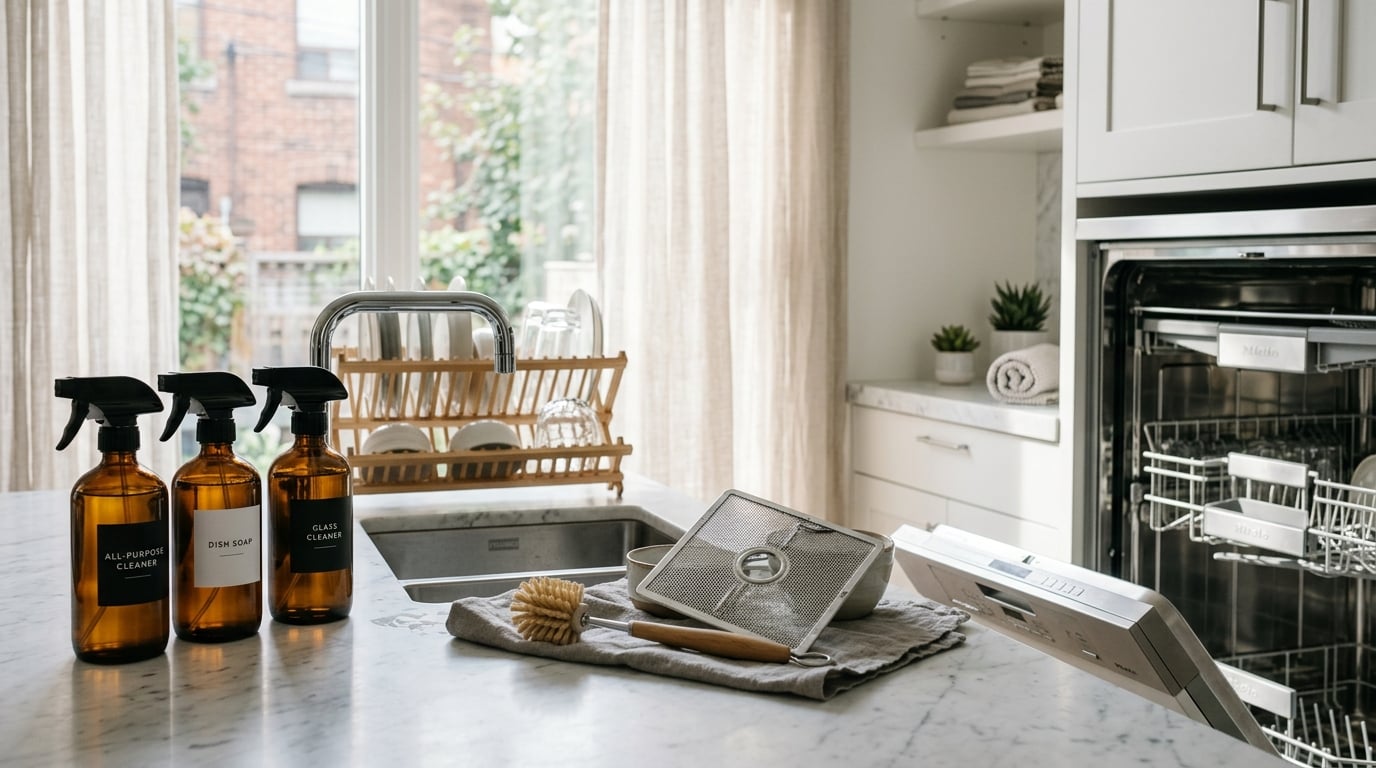
Bring the filter parts to your sink. If the filter is caked in grease or hard water scale, let it soak for ten minutes in a bowl of warm water mixed with a splash of white vinegar. When considering house cleaners products and what’s best for your family, we always recommend starting with gentle, non-toxic solutions. A few drops of standard dish soap and warm water are highly effective against grease and perfectly safe for food-contact environments.
Use a soft-bristled brush—an old toothbrush is perfect—to gently scrub the inside and outside of the cylindrical filter and the flat mesh plate. Never use a wire brush or an abrasive scouring pad, as these can easily tear the delicate micro-mesh, rendering the filter useless and risking damage to your dishwasher’s pump.
Step 5: Rinse and Reinstall
Rinse the components thoroughly under hot running water until the water runs clear. Place the flat mesh screen back into its recess in the dishwasher floor. Insert the cylindrical filter into the opening and twist it clockwise until it locks firmly into place. Ensure it is fully seated; a loose filter can pop up during a cycle and melt against the heating element or allow large debris into the motor.
Unclogging Water Spray Nozzles
While the filter protects the pump, the spray arms are responsible for blasting your dishes with water. If your filter is clean but your dishes still have stuck-on food, clogged spray arm nozzles are likely the culprit. Hard water minerals and tiny seeds (like those from strawberries or tomatoes) can easily wedge themselves into the water jets.
- Remove the Spray Arms: The lower spray arm can usually be removed simply by pulling it straight up, though some models feature a central locking nut that you need to twist counter-clockwise. The upper spray arm, attached to the bottom of the top rack, typically has a similar locking wheel.
- Inspect the Nozzles: Hold the spray arms under good lighting and look at the small holes along the top edges. If you see debris lodged inside, it needs to be extracted.
- Clear the Blockages: Use a wooden toothpick, a sewing needle, or a piece of thin craft wire to gently dislodge the debris. Be extremely careful not to break off a wooden toothpick inside the hole. Try to pull the debris out rather than pushing it further into the arm.
- Dissolve Hard Water Scale: If the holes are crusted over with white mineral deposits, soak the spray arms in a shallow basin filled with warm white vinegar for 30 minutes. The acetic acid will safely dissolve the calcium buildup.
- Rinse and Replace: Run hot water through the center opening of the spray arm to flush out any loosened debris, then click or screw the arms back into their respective places in the dishwasher. Give them a spin with your hand to ensure they rotate freely.
Maintaining Dishwasher Performance
As Canada’s premier platform connecting homeowners with highly vetted, professional independent house cleaners, Home Spritz understands that a truly clean home requires a holistic approach. While our professionals expertly handle the scrubbing, dusting, and mopping of your living spaces, proactive appliance maintenance ensures your home runs efficiently and safely behind the scenes.
To keep your dishwasher in top condition and extend the time between deep filter cleanings, follow these daily and monthly maintenance habits:
- Scrape, Do Not Rinse: You do not need to wash your dishes before putting them in the dishwasher. In fact, the enzymes in high-quality dishwasher detergents are designed to latch onto food particles. If your dishes are completely pre-rinsed, the detergent can actually etch your glassware. Simply scrape solid food scraps into the compost bin before loading.
- Run a Monthly Vinegar Cycle: Once a month, place a dishwasher-safe bowl containing one cup of white vinegar on the top rack of your empty dishwasher. Run a standard hot-water cycle without any detergent. The vinegar will break down grease, eliminate hard water scale, and neutralize any lingering odors.
- Clean the Door Seals: The rubber gasket around the edge of the dishwasher door does not get washed during the cycle. Over time, spills and splatters can accumulate here, leading to black mold and foul smells. Wipe these seals down weekly with a damp microfiber cloth and a mild cleaner.
- Choose the Right Detergent: Use a premium enzymatic detergent and ensure your dishwasher’s rinse aid dispenser is always topped up. Rinse aid breaks the surface tension of the water, preventing hard water spots from forming on your clean dishes.
Maintaining appliances is just one part of a busy household’s cleaning ecosystem. Just as you might need to know how to clean a burnt glass stove top after a cooking mishap, knowing how to quickly service your dishwasher empowers you to keep your kitchen functioning beautifully.
FAQ
How often should I clean my dishwasher filter?
For most households that use the dishwasher daily and scrape (but do not thoroughly rinse) their plates, cleaning the filter once a month is recommended. If you pre-rinse your dishes extensively, you may only need to clean it every three to six months. However, if you notice gritty dishes, slow draining, or bad odors, you should check the filter immediately.
Can a clogged filter cause my dishwasher to leak?
Yes. A severely clogged filter restricts the drainage process. If the water cannot drain out of the tub fast enough, it can pool at the bottom of the machine and eventually seep past the front door gasket, causing a leak onto your kitchen floor.
Is it safe to use bleach to clean the inside of my dishwasher?
You should generally avoid using bleach in your dishwasher, especially if your machine has a stainless steel interior. Bleach is highly corrosive and can permanently damage stainless steel and degrade rubber seals. White vinegar is a much safer, highly effective alternative for descaling and deodorizing your appliance.
Why do my dishes taste or smell like soap after a cycle?
A soapy residue usually indicates that the dishwasher is not rinsing properly, which can be caused by clogged spray arms not delivering enough water, or a dirty filter restricting the water flow. It can also happen if you use too much detergent or if you rely on cheap, heavily fragranced gels rather than high-quality pods or powders. Cleaning the filter and spray arms, followed by a vinegar wash, will usually resolve this issue.
By taking a few moments each month to care for your dishwasher’s internal components, you guarantee cleaner dishes, a better-smelling kitchen, and a longer lifespan for your appliance. For all the other time-consuming cleaning tasks in your home, trust the expert house cleaners on the Home Spritz network to give you back your free time and maintain a consistently sparkling home.