
Ottawa’s distinct seasons bring a relentless cycle of environmental allergens—from the heavy spring pollen drifting across the Gatineau Hills and humid summer mold, to the trapped winter dust and pet dander sealed tightly inside our homes during the freezing months. For families struggling with allergies or asthma, this invisible indoor pollution can turn what should be a peaceful sanctuary into a constant source of sneezing, itchy eyes, and respiratory stress. Fortunately, by implementing targeted hypoallergenic home cleaning tips ottawa residents trust, you can systematically neutralize these hidden triggers and transform your living space into a truly breathable, restorative haven.
Key Takeaways:
- Master the art of removing fine particulates by utilizing advanced damp dusting techniques that permanently trap allergens rather than simply pushing them into the air.
- Eliminate respiratory irritants by swapping heavily scented, harsh chemicals for simple, highly effective fragrance-free solutions, protecting both your lungs and your home’s surfaces.
- Establish a rigorous, consistent maintenance routine for soft furnishings to extract deeply embedded pollen, dust mites, and pet dander before they have the chance to become airborne.
How Do You Start Designing a Low-Allergen Housekeeping System in Your Ottawa Home?
Creating a truly hypoallergenic environment requires more than just occasional, reactionary tidying; it demands a proactive and structured approach to environmental control. Designing a low-allergen housekeeping system begins with understanding how particulate matter moves and settles within your home. In the National Capital Region, where we transition from open windows in the summer to tightly sealed, heated environments in the winter, managing indoor air quality is a year-round commitment. The foundation of this system is based on the principle of top-to-bottom, dry-to-wet cleaning. By starting at the highest points in a room—such as ceiling fans, crown molding, and the tops of bookshelves—you ensure that any disturbed dust falls downward, eventually being captured during your final floor-cleaning phase. Skipping this chronological step often results in re-contaminating surfaces you have already meticulously cleaned.
Another crucial element of your system is regulating your home’s humidity and managing clutter. Dust mites, one of the most common indoor allergens, thrive in environments where humidity exceeds fifty percent. Utilizing a dehumidifier in your basement during Ottawa’s humid July and August can drastically reduce their proliferation. Furthermore, flat surfaces covered in knick-knacks, stacks of paper, and decorative items act as magnets for dust and make thorough cleaning incredibly inefficient. Streamlining your decor not only creates a visually calming space but significantly reduces the surface area where allergens can accumulate.
Consistency is the final pillar of a successful low-allergen system. Sporadic deep cleans allow allergens to build up to critical, symptom-triggering levels. Instead, developing a staggered weekly schedule ensures that no area of your home is neglected long enough to become an allergy hazard. For busy families balancing work and life, maintaining this rigorous schedule can be overwhelming. If you find yourself falling behind, partnering with professionals who understand the nuances of house cleaning ottawa maintaining a spotless capital home can provide the reliable consistency needed to keep indoor allergens permanently at bay.
Why is Microfiber Capture Technology for Fine Dust Essential for Allergy Sufferers?
When it comes to allergy management, the tools you use are just as critical as the effort you expend. Traditional feather dusters and dry cotton cloths are notoriously ineffective for hypoallergenic cleaning. Instead of removing dust, they merely agitate it, launching microscopic particles of dead skin, pet dander, and pollen back into the air you breathe, where it can remain suspended for hours. This is why microfiber capture technology for fine dust is highly recommended by top home cleaning experts. High-quality microfiber cloths are woven from incredibly fine synthetic fibers that create a net-like surface. Through a process called capillary action, paired with a natural positive electrostatic charge, dry microfiber actively attracts and holds onto negatively charged dust particles like a magnet.
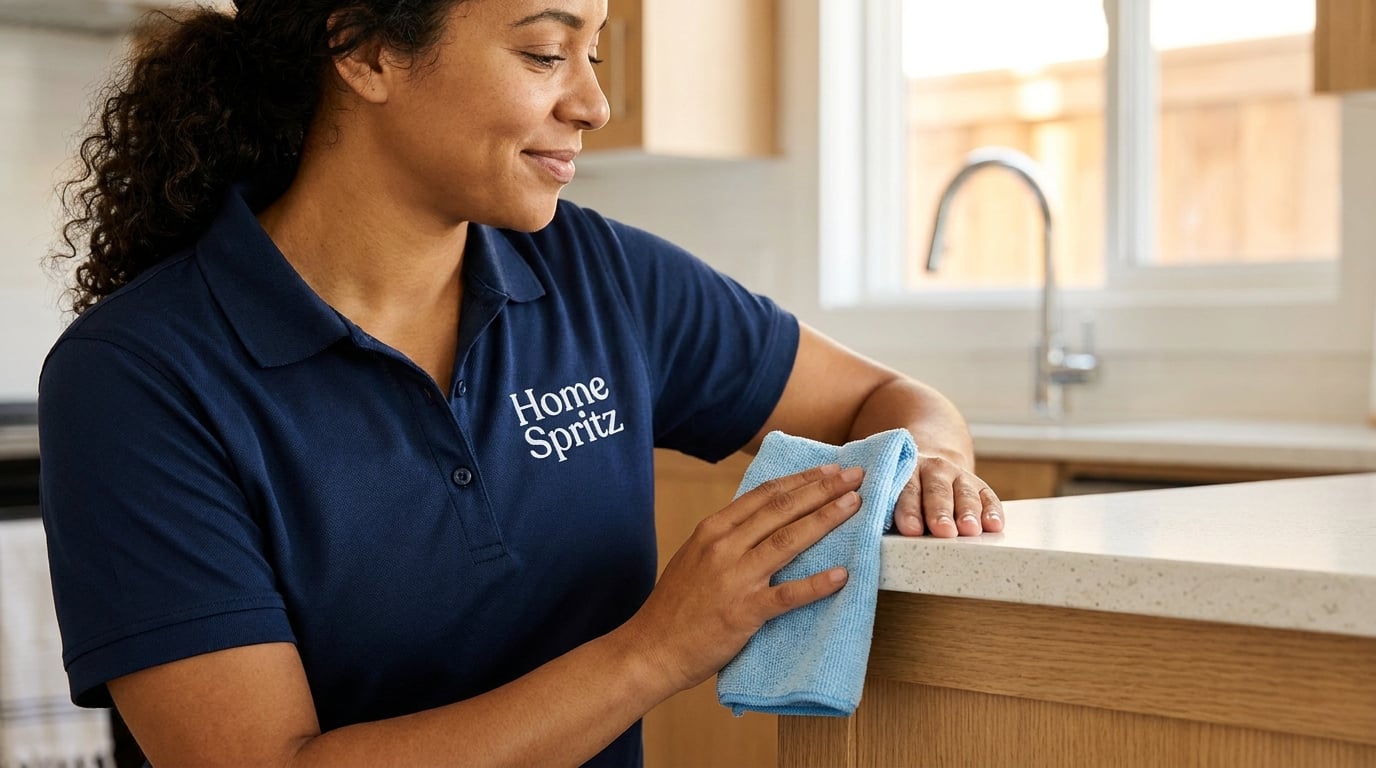
However, for a truly hypoallergenic environment, we must elevate this technology by employing the “damp dusting” technique. Dampening your microfiber cloth prevents even the finest, most stubborn microscopic allergens from escaping. When cleaning vertical surfaces and storage areas, Home Spritz adheres to a strict, non-toxic protocol: for cupboards and painted walls, you should use only plain warm water applied with a well-wrung, damp microfiber cloth. This method easily lifts away sticky residues and surface dust without introducing any harsh chemical fumes or artificial fragrances into the air, keeping the respiratory environment pristine.
By making microfiber an integral part of your routine, you are not just cleaning; you are physically extracting allergens from your indoor ecosystem. It is important to care for these cloths properly to maintain their efficacy. Always wash your microfiber towels separately from cotton items, as cotton lint will clog the microfibers, rendering them useless. Additionally, avoid using fabric softeners or dryer sheets, which coat the fibers in a waxy residue that destroys their static charge and absorbency.
How Frequently Should You Be Washing Soft Furnishings to Remove Pollen and Pet Dander?
Hard surfaces are relatively straightforward to manage, but soft furnishings act as massive, porous filters that absorb and trap millions of airborne allergens. Sofas, fabric dining chairs, area rugs, throw pillows, and heavy drapery are often the biggest culprits in an allergy-prone home. Knowing how frequently you should be washing soft furnishings to remove pollen and pet dander is vital for respiratory relief. In bedrooms, where you spend a third of your life, all bedding—including sheets, pillowcases, and duvet covers—must be washed weekly in hot water to eradicate dust mites and wash away accumulated skin cells and dander.
For living room spaces, fabric sofas and decorative throw pillows should be thoroughly vacuumed using an appliance equipped with a HEPA (High-Efficiency Particulate Air) filter at least twice a week, particularly if you have indoor pets like cats or dogs. HEPA filters are essential because standard vacuums often exhaust fine, allergy-inducing particles back into the room. Cushion covers that are machine washable should be laundered on a monthly basis. Heavy curtains, which act as nets for pollen blowing in through open windows during the spring, should be taken down and gently washed or dry-cleaned at the change of every season.
Area rugs require special attention. They should be vacuumed slowly and methodically in overlapping strokes to pull up deeply embedded dirt. Once a season, taking smaller rugs outside to beat them, followed by a professional deep extraction clean, will drastically lower the ambient allergen levels in your home.
What Are the Best Fragrance-Free Product Choices for a Hypoallergenic Home?
A common misconception in housekeeping is that a home is only clean if it smells like synthetic lemons, pine needles, or “spring rain.” In reality, those artificial scents are heavily laden with Volatile Organic Compounds (VOCs). For allergy and asthma sufferers, VOCs are major respiratory irritants that can trigger severe reactions, migraines, and breathing difficulties. Transitioning to fragrance-free product choices is one of the most impactful steps you can take. True cleanliness actually has no scent at all.
At Home Spritz, we strongly advocate for a minimalist, scientifically backed approach to cleaning solutions that protects your health and your home’s expensive finishes. For sweeping expanses of hard flooring, whether they are luxury vinyl, laminate, or tile, and for your kitchen countertops, you do not need complex, heavily marketed chemical concoctions. The ultimate, most effective solution is astonishingly simple: one single drop of Dawn dish soap mixed into a bucket or spray bottle of warm water. This highly dilute surfactant cuts through grease, lifts dirt, and captures allergens perfectly without leaving a sticky, chemical residue or emitting harmful fumes.
Many homeowners mistakenly turn to DIY natural cleaners for everything, but this can cause severe damage. A prime example is white vinegar. While it is an excellent eco-friendly option, it must be used with strict limitations. Vinegar should be used for hard water mineral scale ONLY, such as descaling a showerhead or a kettle. Because of its high acidity, vinegar should never be used on natural stone countertops (like granite or marble) or on hardwood floors, as it will etch the stone and permanently strip the protective finish off the wood. If you are exploring eco-friendly cleaning solutions for ottawa homes, sticking to the Dawn and water method for floors and counters is your safest, most hypoallergenic bet.
Similarly, bleach is often overused in households trying to achieve a “deep clean.” Bleach is a highly caustic respiratory irritant that can exacerbate asthma symptoms simply through ambient off-gassing. Strict adherence to our cleaning rules dictates that bleach should be reserved for toilet bowls ONLY. It is entirely unnecessary and overly aggressive for general surface cleaning, dusting, or wiping down family spaces.
Frequently Asked Questions (FAQ): What Else Should You Know About Hypoallergenic Cleaning?
How much does it cost to hire a professional hypoallergenic cleaning service in Ottawa?
The cost of professional cleaning varies depending on the size of your home, the presence of pets, and the frequency of the visits. For those requiring stringent, low-allergen environments, investing in a service that utilizes HEPA filtration and adheres to strict, fragrance-free protocols is highly beneficial. For a detailed breakdown of current local pricing, you can consult our comprehensive house cleaning cost in ottawa rate guide average prices to find a plan that fits your family’s budget and allergy needs.
Why shouldn’t I use vinegar to clean my hardwood floors or stone countertops?
While vinegar is celebrated as a natural cleaner, its acidic nature makes it highly destructive to specific materials. Our strict professional rule is that vinegar is for treating hard water mineral scale ONLY. If applied to natural stone like marble or granite, the acid will etch and dull the surface. On hardwood floors, vinegar will slowly eat away at the protective polyurethane finish, leaving the wood vulnerable to moisture damage and looking perpetually cloudy. Always use one drop of Dawn dish soap in warm water instead.
Does bleach help reduce allergens like dust and pollen in the home?
No, bleach does not reduce allergens; in fact, it can make allergy and asthma symptoms significantly worse. Bleach is a harsh chemical that releases strong, irritating fumes (VOCs) that inflame the respiratory tract. For a hypoallergenic home, bleach should be strictly limited to disinfecting toilet bowls ONLY. It should never be used for general surface cleaning, wiping down counters, or managing dust and pet dander.
What is the most effective way to clean painted walls and cupboards without triggering asthma?
The most effective and asthma-friendly method for cleaning painted walls and cupboards is to avoid aerosol sprays and scented all-purpose cleaners entirely. Instead, use plain warm water and a clean, damp microfiber cloth. The microscopic fibers do the heavy lifting by trapping dust, dirt, and sticky fingerprints, while the plain water ensures absolutely no volatile organic compounds or artificial fragrances are released into your indoor air.