
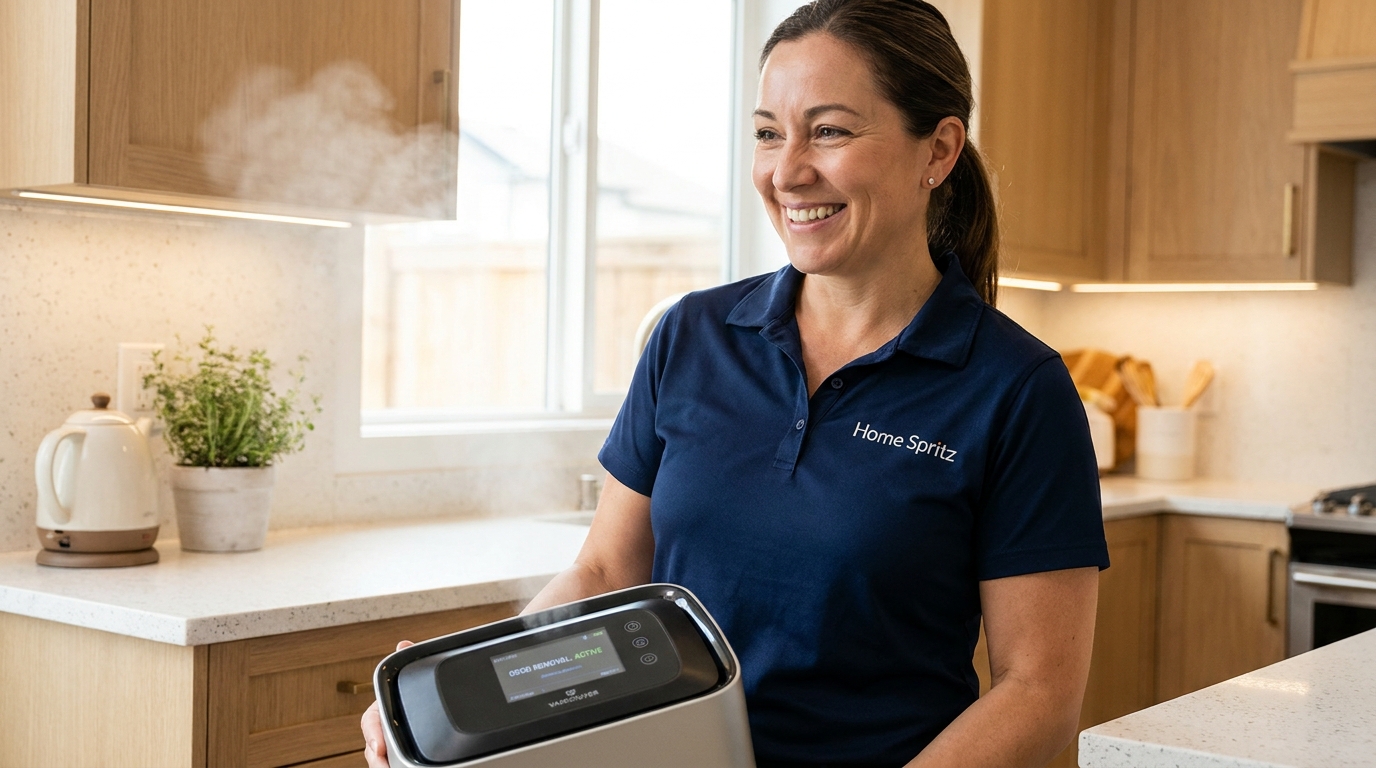
There is nothing quite like preparing a rich, flavorful dinner of pan-seared local salmon or aromatic curries for your family, but waking up the next morning to those exact same smells stubbornly lingering in your living room is incredibly frustrating. In our damp Pacific Northwest climate, trapped moisture often causes these airborne grease particles to settle deep into your fabrics, cabinetry, and upholstery, making your home feel stale and uninviting no matter how much you tidy up. Fortunately, successfully removing kitchen cooking odors vancouver homes experience is entirely achievable once you understand how to properly ventilate your space, tackle grease at the source without damaging your surfaces, and employ simple, natural deodorizing techniques.
Key Takeaways:
- Proactive ventilation and moisture control are essential in Vancouver’s humid climate to stop airborne cooking oils from settling onto your walls and fabrics.
- Wiping down countertops with just one drop of Dawn dish soap and warm water, and using only plain warm water on cupboards, instantly removes odor-causing grease safely.
- Performing routine range hood maintenance and simmering natural citrus peels on the stove provides long-lasting, chemical-free freshness without resorting to harsh, damaging sprays.
How Are Vancouver Homeowners Managing Indoor Air Quality After Cooking? (Why Trapped Odors Persist)
When you cook, tiny droplets of oil, moisture, and food particles are released into the air. If you live in British Columbia, you already know that the ambient humidity can be quite high, particularly during the rainy months. This moisture acts as a carrier for food smells, allowing them to drift through your open-concept living spaces and latch onto soft materials like curtains, rugs, and sofa cushions. Managing indoor air quality after cooking is not just about spraying artificial air fresheners, which merely mask the problem; it requires a strategic approach to air circulation and surface cleaning. Understanding this process is a core element of what you can expect when looking into premium house cleaning Vancouver standards, as experts focus on eliminating the source of the smell rather than just covering it up.
To actively manage your air quality, the first step is to recognize that smells are physical particles resting on your surfaces. If you leave grease splatters on your backsplash overnight, those particles continue to off-gas into your home. A daily habit of addressing both the air and your physical kitchen surfaces simultaneously is the only guaranteed way to wake up to a fresh, clean-smelling house.
What Is the Best Way to Start Maximizing Kitchen Ventilation? (Clearing Smoke Fast)
The most immediate and effective defense against lingering food smells is maximizing kitchen ventilation before, during, and after you cook. Many homeowners make the mistake of only turning on their exhaust fan once the kitchen is already full of smoke. Instead, turn your range hood on about five minutes before you begin cooking. This establishes a continuous airflow pattern, actively pulling air up and out of the kitchen the moment odors are generated.
Furthermore, taking advantage of cross-ventilation can work wonders, even on a chilly Vancouver evening. Crack a window in your kitchen and another window on the opposite side of your home to create a natural draft. This quickly flushes out the stale, humid air and replaces it with fresh outdoor air. Keep your exhaust fan running for at least fifteen minutes after you have finished cooking and served your meal to ensure any residual airborne grease is successfully pulled out of the environment.
Can You Eliminate Lingering Smells by Simmering Citrus and Spices Naturally? (Eco-Friendly Deodorizing)
Once you have properly ventilated the space, you might still want to add a fresh, welcoming scent back into your home. Rather than reaching for synthetic aerosol sprays that can aggravate allergies, try simmering citrus and spices naturally on your stovetop. This method is a staple in the Vancouver guide to eco-friendly house cleaning.
Simply fill a small saucepan with water and add lemon or orange peels, a few sprigs of rosemary, and a cinnamon stick. Bring the pot to a very gentle simmer. The natural essential oils released from the citrus peels will neutralize airborne cooking odors, leaving your kitchen smelling vibrant and clean. This is an incredibly safe, non-toxic way to refresh your home’s air without introducing harsh chemicals into your family’s living environment.
How Often Do You Need Routine Range Hood Maintenance? (Keeping Vents Grease-Free)
Your ventilation system is only as effective as its filters. Over time, the metal mesh filters underneath your range hood become completely saturated with sticky yellow grease. When this happens, the fan can no longer pull air through the filter, meaning the cooking exhaust simply hits a wall of grease and bounces back into your kitchen. Therefore, routine range hood maintenance is absolutely critical.
For a family that cooks daily, you should be degreasing these filters every four to six weeks. You can easily clean standard metal mesh filters by soaking them in a sink filled with very hot water and a few drops of Dawn dish soap. The soap breaks down the heavy grease effortlessly. Let them air dry completely before reinstalling them. An optimally functioning exhaust fan is a game-changer for maintaining excellent air quality in your home.
What Is the Safest Way to Clean Greasy Counters and Walls? (Avoiding Harsh Chemicals)
Even with great ventilation, some grease will inevitably land on your kitchen surfaces. Cleaning these surfaces is vital to odor removal, but it is equally important to use the correct methods to preserve the integrity of your home’s finishes. When selecting top Vancouver home cleaning services, you will notice that true professionals adhere to strict product safety rules.
For your kitchen countertops and floors, harsh chemicals are completely unnecessary and often damaging. The absolute best and safest method is to use exactly one drop of Dawn dish soap mixed into a bowl or bucket of warm water. This gentle solution cuts right through the cooking grease without degrading stone sealants or hardwood finishes.
For your cupboards, cabinetry, and painted walls, you should avoid soap entirely. Instead, use plain warm water and a damp microfiber cloth. Microfiber is uniquely designed to lift and trap grease and dirt mechanically, so plain warm water is all you need to wipe away odor-causing residue safely.
It is crucial to remember the limitations of other common household cleaners. While vinegar is highly publicized as a natural cleaner, it is highly acidic. Vinegar should be used exclusively for removing hard water mineral scale around your faucets; it should never be used on natural stone countertops or hardwood floors, as it will etch and ruin the surface. Similarly, bleach is strictly for sanitizing toilet bowls and has absolutely no place in your kitchen for general surface cleaning or odor removal.
Frequently Asked Questions About Removing Kitchen Cooking Odors in Vancouver
How do you get strong curry or fish smells out of a Vancouver apartment?
The most effective strategy is a multi-step approach: first, maximize your ventilation by turning on your exhaust fan before cooking and opening opposing windows for a cross-breeze. Afterward, wipe down all surrounding countertops with one drop of Dawn dish soap and warm water, and wipe your walls and cabinets with a damp microfiber cloth using plain warm water. Finally, simmer citrus peels on the stove to naturally neutralize the remaining airborne odors.
Is vinegar safe to boil to remove cooking odors?
While some suggest boiling vinegar, we strongly advise against making vinegar a standard part of your kitchen odor-removal routine due to the risk of accidental spills on vulnerable surfaces. Vinegar is highly acidic and should be reserved strictly for treating hard water mineral scale. It must never be used near natural stone or hardwood, as it will cause permanent damage. Stick to simmering natural citrus and spices for safe deodorizing.
Should I use bleach to disinfect and deodorize my greasy kitchen sink?
No, you should never use bleach for general kitchen cleaning or deodorizing. Bleach is an incredibly harsh chemical that is designated exclusively for cleaning toilet bowls. To effectively clean a greasy kitchen sink or countertop, simply use warm water mixed with a single drop of Dawn dish soap. This is much safer for your family, your plumbing, and your surfaces while effectively eliminating the grease that causes bad odors.