
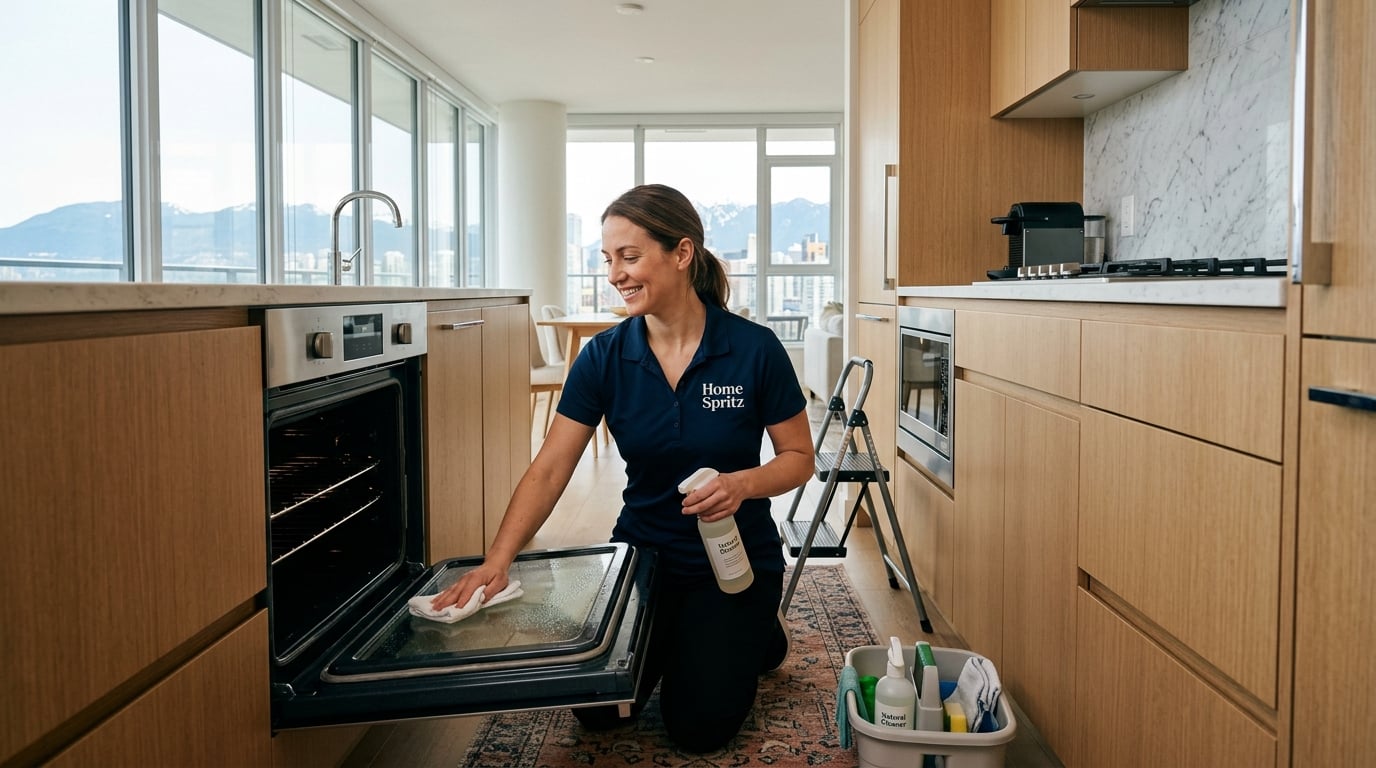
If you love cooking but dread the cleanup, you are certainly not alone. You look forward to pulling a perfectly golden roast, a bubbling lasagna, or a fresh batch of cookies out of the oven, but that anticipation is quickly dampened when you have to peer through a murky, grease-splattered oven door just to check on your food’s progress. No matter how meticulously you scrub your countertops or polish your sink, a heavily stained oven glass can make your entire kitchen feel unkempt and dirty.
The frustration rarely ends there. When faced with stubborn, dark brown grease spots, most people instinctively reach for heavy-duty commercial oven cleaners. However, these potent products often emit harsh, noxious fumes that linger in your home, forcing you to open all your windows for ventilation—a highly inconvenient task in the middle of a freezing Canadian winter. Worse still, if you grab an abrasive scouring pad or steel wool in a desperate attempt to scrub away the hardened grime, you run the very real risk of permanently scratching the tempered glass. Once that glass is scratched, it not only looks permanently cloudy, but those microscopic grooves actually trap grease much faster the next time you cook.
Fortunately, you do not need toxic chemicals, intense scrubbing routines, or expensive specialty tools to restore that crystal-clear, showroom shine. With a few simple, natural pantry staples and the right resting technique, you can lift away even the most stubborn baked-on grease completely scratch-free. Below, we share our expert, hassle-free method for achieving a sparkling oven door, helping you keep your kitchen looking pristine, well-maintained, and safe for your family.
Why Oven Glass Collects Baked-On Grease
To understand exactly how to clean your oven door effectively, it helps to know why the grease gets so stubbornly stuck to the glass in the first place. When you roast meats, bake casseroles, or cook anything containing oils and animal fats at high temperatures, microscopic food particles and grease splatter violently around the interior of the appliance. While you might wipe down your countertops or stovetop immediately after cooking, the inside of your oven is almost always left to cool down on its own. This gives that liquid grease plenty of time to cool, solidify, and harden directly onto the glass surface.
Each time you use the oven thereafter, those existing splatters are essentially re-baked onto the glass. Over weeks and months of routine cooking, this creates a tough, polymerized layer of carbonized grease that feels almost like cement. Trying to scrape this hardened layer off with a harsh, sharp tool is a major mistake. Just like when you figure out how to clean burnt glass stove top surfaces, the secret to maintaining pristine oven glass is patience and chemical reaction rather than physical friction. Micro-scratches from steel wool, harsh brushes, or abrasive cleaning powders will ruin the smooth, reflective finish of the glass. Always treat appliance glass with the utmost care to ensure its longevity.
The Safe Baking Soda Paste Method
When it comes to safely breaking down heavy, polymerized grease without scratching the delicate glass or filling your home with toxic fumes, baking soda (sodium bicarbonate) is the ultimate household hero. According to Health Canada’s guidelines on household chemical safety, aggressively mixing commercial cleaning chemicals or relying on heavily fragranced, high-emission aerosol products can negatively impact your indoor air quality. In contrast, natural, unscented alternatives like baking soda are highly recommended for safe indoor surface cleaning.
Because baking soda is highly alkaline, it does a phenomenal job of cutting through acidic grease and burnt-on food particles without posing a risk to your family’s respiratory health. Here is how to execute the baking soda method flawlessly:
- Cool the Oven Completely: Never attempt to clean a warm or hot oven door. Ensure the appliance has been turned off and is completely cool to the touch. Cleaning hot glass with cool water or wet pastes can cause the tempered glass to shatter under sudden temperature changes.
- Lay Down Protective Towels: Open the oven door so that it lays completely flat. Place a few old rags, towels, or newspaper on the floor right beneath the door hinges. This will catch any runaway drips, dirty water, or loose crumbs, protecting your kitchen floors.
- Mix Your Cleaning Paste: In a small mixing bowl, combine roughly half a cup of baking soda with just enough warm water to form a thick, spreadable paste. You want the consistency to be similar to shaving cream or pancake batter—not too runny that it pools at the edges, but wet enough to spread evenly over the stains.
- Apply Generously: Spread the paste over the entire interior glass of the oven door. You can use your fingers (wearing rubber gloves if you prefer) or a soft silicone baking spatula. Be very careful to avoid pushing the paste into the open vents at the top or bottom of the oven door.
- Let It Dwell: This is the most crucial step of the entire process. Because we are not using abrasive scrubbers to physically force the grime off, the baking soda needs ample time to chemically break down the grease. Leave the paste to sit for at least 30 to 45 minutes. For incredibly stubborn, years-old grime, you can easily leave the paste on overnight for maximum lifting power.
Wiping Away Grease Without Scratching
Once the baking soda paste has had adequate time to soften and lift the baked-on grease, it is time to wipe it away. At this stage, do not reach for the rough, scouring side of a sponge.
- Use a Damp Microfiber Cloth: Take a soft, high-quality microfiber cloth, dampen it with warm water, and gently wipe away the paste. The baking soda is mildly abrasive enough to lift the dissolved grease, but gentle enough not to leave any scratches on the glass.
- The White Vinegar Trick: If you see any cloudy white residue left behind after wiping, spritz a little plain white vinegar directly onto the glass. The vinegar will react with the leftover baking soda, creating a gentle, bubbling fizz that lifts the very last microscopic bits of grease out of the pores of the glass.
- Buff to a Brilliant Shine: Take a fresh, clean, and dry microfiber cloth and buff the glass in tight circular motions. The techniques used here are very similar to those needed to safely clean glass shower doors with hard water stains—gentle, repetitive circular buffing leaves a streak-free, gleaming finish that makes the glass look virtually invisible.
Preventing Heavy Oven Buildup
Once your oven door is shining beautifully again, you will naturally want to keep it that way for as long as possible. The secret to a consistently clean oven is light, ongoing maintenance rather than waiting for a massive, greasy disaster to strike.
- Wipe Spills While the Oven is Warm (Not Hot): Once you have finished baking and the oven has cooled down to a safe, slightly warm temperature, do a quick wipe-down of the glass with a damp cloth. Catching splatters before they cool down and harden completely prevents them from baking on permanently during your next cooking session.
- Use the Right Bakeware: When roasting fatty cuts of meat, use much deeper roasting pans or consider using heat-safe oven roasting bags. This significantly minimizes the amount of liquid grease that can spit and splatter onto the door.
- Place a Catch Tray on the Rack Below: If you are baking a bubbling fruit pie, a messy lasagna, or a cheesy casserole, simply place an aluminum baking sheet on the rack directly below your dish to catch any accidental drips.
We know that maintaining a truly spotless kitchen requires consistent time and energy—a luxury that many busy Canadian families simply do not have in their weekly schedules. That is exactly where we step in. At Home Spritz, we deeply understand the demands of your busy life. As Canada’s trusted, premier platform for connecting homeowners with top-tier, rigorously vetted independent house cleaners, we provide hassle-free solutions for everything from routine weekly tidying to intensive deep-cleaning tasks. Whether you need an extra hand keeping your oven door pristine or you are looking for a professional to completely clean an oven and oven racks top to bottom, booking a trusted local expert through Home Spritz ensures your home gets the meticulous, authoritative care it deserves. We let you enjoy a beautifully clean home without any of the added stress or elbow grease.
FAQ
How do you clean the glass between the oven door panes?
Many modern oven doors are designed with two or three distinct panes of glass for insulation. Sometimes, liquid drips or dust can sneak through the air vents at the top or bottom of the door, landing squarely between the panes where you cannot easily reach them. To clean this inaccessible area, you should first consult your manufacturer’s manual to see if you can easily remove the top trim of the door to slide the inner glass panel out. If dismantling the door is not an option, a popular trick is to wrap a soft microfiber cloth or a flexible cleaning wipe around a straightened wire coat hanger. You can then gently slide this makeshift tool up through the bottom vents of the door to wipe away internal dust and streaks.
Can I use Windex or other standard glass cleaners on oven glass?
While standard blue glass cleaners are fantastic for bathroom mirrors and household windows, they are highly discouraged for the inside of an oven door. The interior glass is regularly exposed to extreme, food-baking heat. Any residual ammonia or chemical compounds left behind from standard glass cleaners can burn off and release unpleasant, potentially unsafe fumes into your food the next time you turn on the oven. It is always safest to stick to natural, heat-safe cleaning agents like baking soda and vinegar for the interior. However, you can absolutely use standard glass cleaner on the exterior side of the oven door to remove fingerprints.
Will a Magic Eraser scratch oven glass?
Yes, it certainly can. Magic Erasers are manufactured from melamine foam, which functions exactly like incredibly fine, microscopic sandpaper. While they are phenomenal at removing stubborn scuffs from painted walls or baseboards, using them on delicate, tempered oven glass or smooth glass stovetops can leave permanent micro-scratches behind. Over time, these tiny scratches will dull the beautiful finish of the glass and make it significantly harder to clean in the future, as the grooves trap grease. It is always best to stick to entirely non-abrasive tools like soft sponges, silicone scrapers, and microfiber cloths.